
Collection: Flea, Tick & Worming

Flea, tick and worming treatments for dogs and cats, covering chews, spot-on applications and collars from the major manufacturers sold in Australia. Every coverage claim on this page and in the linked dog flea and worming and cat flea and worming ranges is attributed to the manufacturer's own Australian product page, never to a reseller listing.
What is in the range
- For dogs, the range covers chews such as NexGard, NexGard Spectra, Simparica, Simparica Trio and Credelio Plus, spot-on treatments including Advantage, Advantix, Advocate, Frontline Plus, Revolution and the Bravecto range, the Seresto collar, and worming-only tablets such as Drontal, Milbemax, Heartgard Plus, Interceptor Spectrum, ParaGard and Fido's All Wormer.
- For cats, the range covers spot-on treatments including NexGard Spectra, Bravecto and Bravecto Plus, Advantage, Advocate, Revolution and Revolution Plus, and Frontline Plus, the Seresto collar for cats, and worming-only tablets such as Drontal and Milbemax.
 NexGard Spectra for dogs 15.1-30 kg, 3 pack
 NexGard for dogs 25.1-50 kg, 3 pack
 Bravecto chew for large dogs 20-40 kg
 Simparica for large dogs 20.1-40 kg, 3 pack
 Advantage for dogs 10-25 kg, 6 pack
 Advocate for dogs 10-25 kg, 3 pack
 Seresto collar for dogs over 8 kg
 Drontal All-Wormer for dogs up to 10 kg
 NexGard Spectra Spot-On for cats 2.5-7.5 kg, 3 pack
 Bravecto Spot-On for cats 6.25-12.5 kg, 2 pack
 Revolution for cats 2.6-7.5 kg, 3 pack
 Milbemax for dogs 5-25 kg, 2 tablets
Three questions before buying
- Which parasites need covering? Manufacturer labels split into fleas only, fleas plus paralysis tick, fleas plus tick plus heartworm, and fleas plus tick plus heartworm plus intestinal worms. A product's own label states exactly which of these it covers; no two brands cover an identical list.
- Which application suits the pet? A chew is swallowed, a spot-on goes on the skin, and a collar is applied once and left on for months. Each format has its own manufacturer-stated speed of action and any handling instructions, such as a drying period after a spot-on before bathing or swimming.
- How often does it need to be given? Most chews and spot-ons are monthly, but the paralysis tick claim on some spot-on products runs on a shorter two-weekly cycle even though the flea claim on the same product is monthly, and a collar can be labelled for as long as 8 months.
Minimum age and weight also vary by individual product rather than by brand family, so the specific product's own label is the reference point, not a general assumption about what the brand usually allows. A household with both a dog and a cat needs to check compatibility as well as coverage: some spot-on treatments made for dogs state on their own label that they are unsafe for cats, so a multi-pet household should never assume a dog product can be shared or that a treated dog and an untreated cat can mix freely straight after application.
Read the full guide
For a side-by-side comparison of what each product covers, how often it is given, and the minimum age for puppies and kittens, see the buying guide Flea and tick treatment for dogs and cats in Australia: what each product covers and how often. It sets out separate comparison tables for dogs and cats, built only from facts confirmed on each manufacturer's Australian page, plus a section on paralysis tick cover specifically and a section on worming-only products for households that only need that part of the range.
Browse by species in dog flea and worming or cat flea and worming.
-
Frontline Plus Flea & Tick Protection for Dogs 10-20kg - 6 Pack
Vendor:FrontlineRegular price $164.95 AUDRegular priceUnit price per -
Frontline Plus Flea & Tick Protection for Dogs 10-20kg - 3 Pack
Vendor:FrontlineRegular price $96.95 AUDRegular priceUnit price per -
Frontline Plus Flea & Tick Protection for Dogs up to 10kg - 6 Pack
Vendor:FrontlineRegular price $157.95 AUDRegular priceUnit price per -
Frontline Plus Small 0.67Ml 3S
Vendor:FrontlineRegular price $92.95 AUDRegular priceUnit price per -
Frontline Plus Cat 0.5Ml 6's
Vendor:FrontlineRegular price $157.95 AUDRegular priceUnit price per -
Frontline Plus Cat 0.5Ml 3'S
Vendor:FrontlineRegular price $92.95 AUDRegular priceUnit price per -
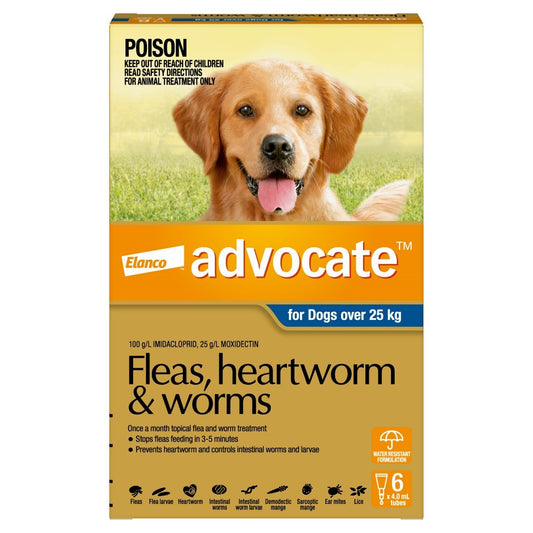
Advocate Dog over 25Kg 6's
Vendor:AdvocateRegular price $242.95 AUDRegular priceUnit price per -
Advocate Dog over 25Kg 3'S
Vendor:AdvocateRegular price $141.95 AUDRegular priceUnit price per -
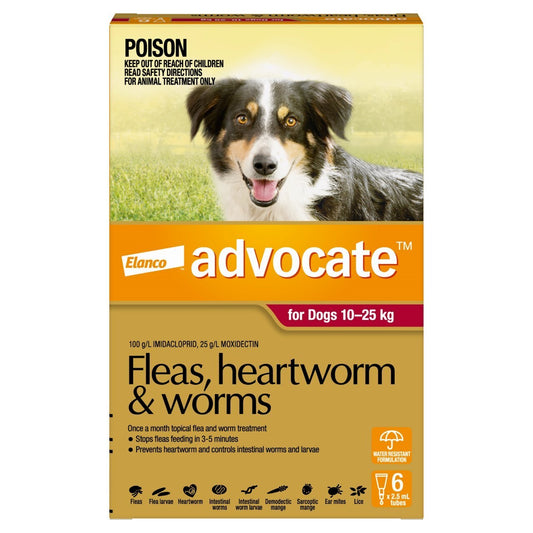
Advocate Dog 10-25kg 6's
Vendor:AdvocateRegular price $220.95 AUDRegular priceUnit price per -
Advocate Dog 10-25kg 3'S
Vendor:AdvocateRegular price $126.95 AUDRegular priceUnit price per -
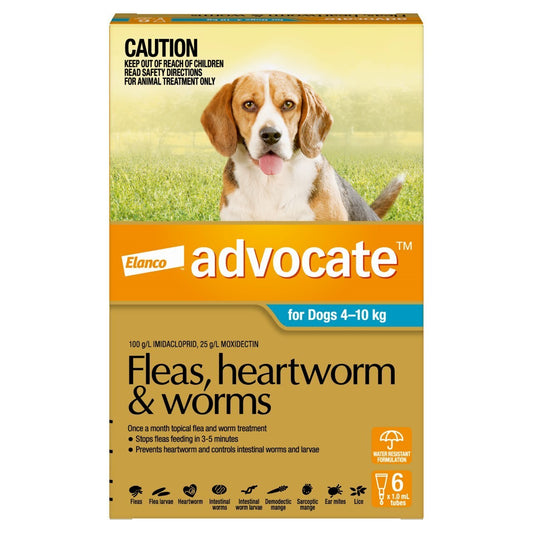
Advocate Dog 4-10kg 6's
Vendor:AdvocateRegular price $201.95 AUDRegular priceUnit price per -
Advocate Dog 4-10kg 3'S
Vendor:AdvocateRegular price $140.95 AUDRegular priceUnit price per -
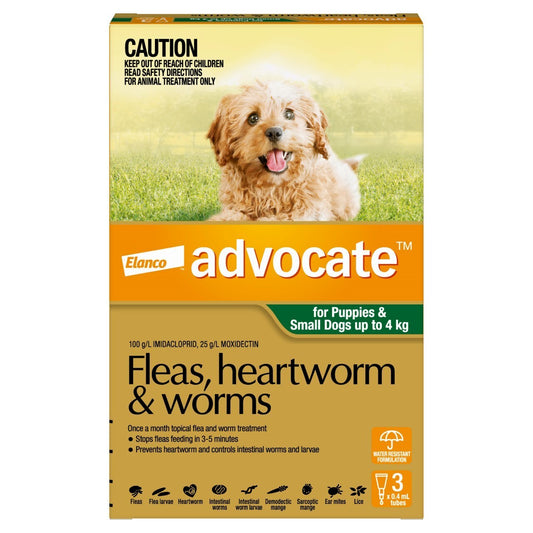
Advocate Dog up to 4kg 3'S
Vendor:AdvocateRegular price $131.95 AUDRegular priceUnit price per -
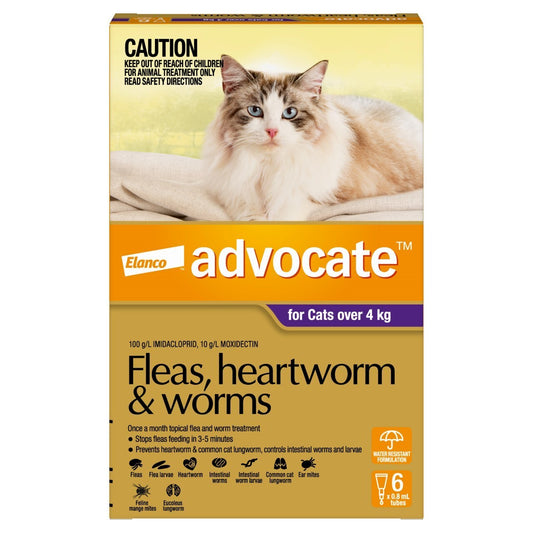
Advocate Cat over to 4kg 6's
Vendor:AdvocateRegular price $201.95 AUDRegular priceUnit price per -
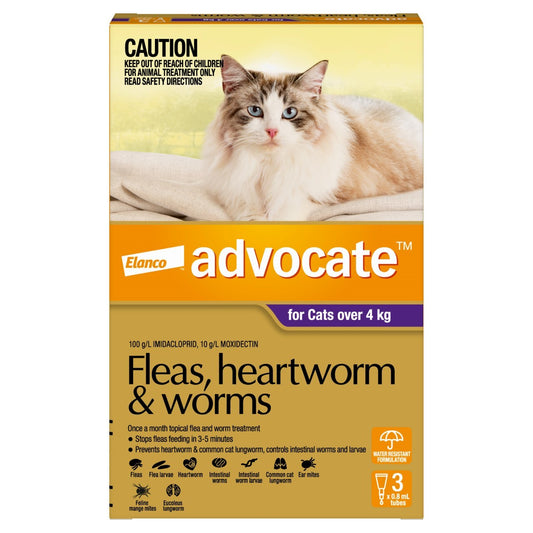
Advocate Cat Over to 4kg 3'S
Vendor:AdvocateRegular price $114.95 AUDRegular priceUnit price per -
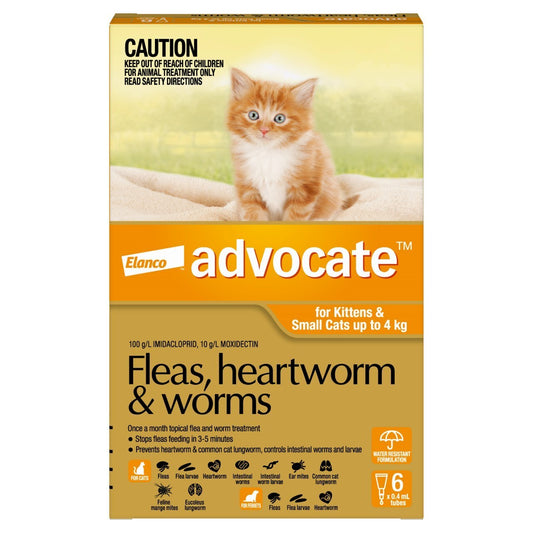
Advocate Cat under 4kg 6's
Vendor:AdvocateRegular price $158.27 AUDRegular priceUnit price per -
Milbemax Dog 2'S(5 - 25Kg)
Vendor:MilbemaxRegular price $47.95 AUDRegular priceUnit price per -
Drontal All-Wormer for Small Dogs & Puppies to 3kg - 4 Tablets
Vendor:DrontalRegular price $27.95 AUDRegular priceUnit price per -
Drontal All-Wormer for Medium Dogs up to 10kg - 2 Chews
Vendor:DrontalRegular price $36.95 AUDRegular priceUnit price per -
Milbemax Dog 2'S(0.5 - 5Kg)
Vendor:MilbemaxRegular price $21.95 AUDRegular priceUnit price per













Flea, tick and worming: common questions
Does NexGard cover paralysis tick?
Yes. NexGard's manufacturer page states it treats and controls ticks, including paralysis tick, brown dog tick and bush tick, alongside fleas, as a monthly chew for dogs.
Chew or spot-on for a cat?
Both formats are available and the choice comes down to the individual product's own coverage, not the format itself. NexGard Spectra, Bravecto, Bravecto Plus, Advantage, Advocate, Revolution, Revolution Plus and Frontline Plus for cats are all spot-on applications; there is no cat chew in this range. Check each product's own label for which parasites it covers before choosing between them.
How often is Bravecto given?
It depends on the specific Bravecto product. The manufacturer's Australian pages state the chew for dogs and the spot-on for cats are given every 3 months for fleas and paralysis tick, the spot-on for dogs is given every 6 months for fleas and paralysis tick, and Bravecto Plus for cats is sold as 3 months of flea and tick protection, with MSD's page directing re-application every 2 months where continuous heartworm prevention is needed. Brown dog tick and bush tick cover runs for a shorter window than the flea and paralysis tick claim on several of these products, so the label is worth checking for the specific tick involved.
Do I need a prescription for flea and tick treatment in Australia?
The products in this range are registered veterinary chemicals sold in Australia without a prescription, and Easy Pets does not ask for one. None of the manufacturer pages checked for this page states that its product is prescription-only. Labels can change, so the current product label is always the reference, and a vet is the right person to ask about a pet with a health condition or one already on medication.
Which products cover heartworm as well as fleas and ticks?
On the manufacturer pages checked, NexGard Spectra, Simparica Trio, Credelio Plus, Bravecto Plus (cats) and Revolution Plus (cats) all state coverage of fleas, paralysis tick and heartworm prevention in one product, alongside intestinal worms. Plain NexGard, Simparica, Bravecto (dog and cat variants other than Plus), Advantage, Advantix and plain Bravecto Spot-On do not include a heartworm claim on their own pages.
From what age can a puppy start flea and tick treatment?
The minimum age is set by each individual product's own label rather than by brand. Advantage states it is safe from birth. ParaGard and Interceptor Spectrum allow puppies from 2 weeks of age, Milbemax for dogs from 2 weeks and 0.5 kg, Heartgard Plus from 6 weeks, Advantix and Advocate from 7 weeks, and NexGard, NexGard Spectra, Bravecto, Simparica, Simparica Trio, Credelio Plus and Frontline Plus from 8 weeks. Seresto's label allows dogs from 7 weeks. Always check the specific product's own label before treating a young puppy.
Is Advantix safe to use around cats?
No. Advantix's own manufacturer page states it is safe for dogs but is dangerous to cats because of their inability to metabolise certain compounds in the product, and it recommends keeping a cat separated from a freshly Advantix-treated dog for up to 48 hours. Households with both dogs and cats should check this kind of cross-species warning on the specific product's label before use.
What is the difference between a worming-only product and a combination product?
A worming-only product such as Drontal, Milbemax, Heartgard Plus, Interceptor Spectrum, ParaGard or Fido's All Wormer treats intestinal worms and, in some cases, prevents heartworm, but carries no flea or tick claim on its manufacturer page. A combination product such as NexGard Spectra, Simparica Trio or Credelio Plus covers fleas and paralysis tick as well as heartworm and intestinal worms in one chew. Which one suits a household depends on whether fleas and ticks are already being covered by a separate product.