

Quick Summary
To verify Australian pet food, start by separating origin claims from nutrition claims on the label, then confirm the manufacturer's name, address and Australian production site. Ask the manufacturer where the product is made and for the batch analysis, and record the batch code and best-before date.
- Check whether the label says manufactured in Australia or only that ingredients are Australian.
- Find the manufacturer's name and address printed on the pack and confirm it operates an Australian site.
- Confirm the product states it is complete and balanced for a stated life stage.
- Record the batch code and best-before date at purchase so a recall can be traced.
- Read independent testing certificates carefully, checking who ran the test and which batch it covers.
Table of Contents
Why Verifying Australian Pet Food Takes More Than Reading the Front of the Bag
Most pet owners who buy "Made in Australia" food are relying on a few words printed on the front of a bag, and a careful check to verify Australian pet food starts there. Readers sceptical of the marketing can see whether Australian-made food is actually better for pets. That is a reasonable starting point, but it is rarely enough to answer the question that really matters: can you prove where the food was made, what went into it, and whether it meets the standard it claims? Shoppers often ask this exact question, so this guide sets out a practical way to check.
Australian pet food sales are growing. Sales rose by 5.7% a year between 2020 and 2024, reaching US$2.9 billion in 2024 Agriculture and Agri-Food Canada sector trend analysis on pet food. Growth like that brings more products onto shelves, and more products make it harder to verify Australian pet food and tell a careful manufacturer from a careless one.
Here is the core problem. The front of a pack is marketing. The back is where the facts sit, and even there, the detail varies from brand to brand. A review of consumer pet food choices describes this as a developing research field with limited studies, so there is no single, settled checklist that every shopper can rely on systematic literature review on pet food choices.
This guide covers four checks: reading the label, confirming the manufacturer, asking the right questions, and looking at batch codes and testing evidence.
How to Read Pet Food Labels for Origin and Nutrition Claims
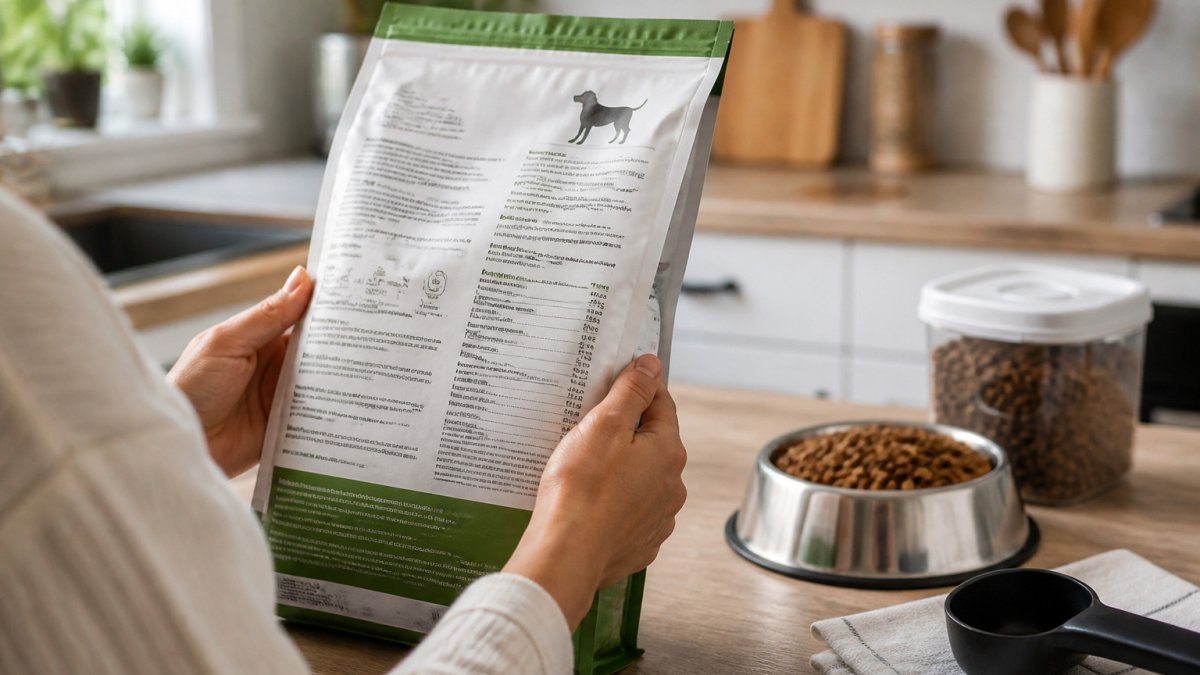
A label is your first source of evidence. Start by separating two things: origin claims and nutrition claims. They are not the same, and a product can be strong on one and silent on the other.
Origin claims include phrases like "Made in Australia" or "Australian chicken." Look for the exact wording. "Made in Australia" usually refers to where the product was manufactured, while "Australian ingredients" refers to where the ingredients came from. A bag can carry one claim without the other.
Nutrition claims need a different check. Look for a statement that the food is complete and balanced for a stated life stage. Then look for the guaranteed analysis, which lists minimum protein and fat and maximum moisture.
- Check the origin wording: manufactured in versus ingredients sourced from.
- Check the life stage: adult, puppy, senior, or all life stages.
- Check the feeding guide and the manufacturer's contact details.
- Check the batch code and best-before date.
Understanding Complete and Balanced Pet Food Meaning
Dogpro Adult Dry Dog Food 20kg →
"Complete and balanced" is one of the most important phrases on a pet food label, and one of the most misunderstood. To judge whether a product meets your pet's needs, practical feeding guidance for puppies shows how much to feed. In plain terms, it means the food is designed to supply all the nutrients a pet needs for a stated life stage when fed as the only food. It does not mean a product is premium, and it does not mean the ingredients are local.
To check the claim, look for a statement that the food meets a recognised nutrient profile for its life stage. Some manufacturers reference a nutrient profile for their product, so treat any such reference as a starting point, not proof.
Step-by-Step: Checking Manufacturer Details and Made-in-Australia Claims
This is where most verification effort pays off. Work through these steps in order.
- Find the manufacturer's name and address printed on the pack.
- Search that name and confirm it operates a production site in Australia.
- Check the company website for a contact phone number and an email address that works.
- Ask whether the product is made at that site or contract-manufactured elsewhere.
- Keep a record of the answer and the batch number you were given.
If a brand cannot tell you where its product is made, that is information too.
Pet Food Manufacturer Safety Questions to Ask Before You Buy
When you contact a manufacturer, ask specific questions. Vague reassurance is not evidence. Useful questions include:
- Where is this product manufactured, and at which facility?
- Does the facility hold any recognised food safety certification, and can you share the certificate?
- How do you trace ingredients back to their supplier?
- What is your process if a batch is found to be unsafe?
- Can you provide the analysis for the batch I am buying?
Expect most reputable manufacturers to answer these clearly. Hesitation or refusal is a reason to look elsewhere. If your dog has a sensitive coat or skin, guidance on which ingredients and formulations suit that need can help you vet food safety.
Checking Batch Codes, Best-Before Dates and Pet Food Recalls Australia
Batch codes link a bag to a production run. If a problem is found, a batch code is how a recall is targeted. Note the batch code and best-before date when you buy, and keep the bag or a photo of the label until the food is finished.
For recalls, check the official notices rather than relying on social media posts. Recalls are announced through official channels, and manufacturers are expected to act on confirmed problems. If a recall touches a product you own, stop feeding it and contact your vet.
Dogpro Adult Dry Dog Food 20kg →
Interpreting Independent Testing Certificates and Regulatory Claims
Some brands publish independent testing results. These can be useful, but read them carefully. Check who ran the test, when it was done, which batch it covers, and what it measured. A certificate for one batch does not prove the next batch matches it.
Be cautious with regulatory claims. A pet food industry body has stated that there is currently no pet food regulation in Australia, a claim reported through a media post rather than a formal government document, so do not assume a product has been independently verified just because it is sold as pet food ABC News report quoting the Pet Food Industry Association of Australia. Check claims against the actual document, not the summary.
Requesting Your Next Verification Step Before Placing an Order
Before you buy, you can finish the check in a few minutes. Confirm the origin wording on the pack, find the manufacturer, and send one or two targeted questions. If the answers are clear, you have done the work that most shoppers skip.
If you want a starting point, our range includes the Dogpro Adult Dry Dog Food 20kg (https://www.easypets.au/products/dogpro-adult-dry-dog-food-20kg, $70.95), which is made in New South Wales by Hypro Group, and the CopRice Working Dog Adult Chicken Dry Dog Food 20kg (https://www.easypets.au/products/coprice-working-dog-adult-chicken-dry-dog-food-20kg, $80.95), which is a complete and balanced dry food for adult working dogs. Contact us before ordering if you need a batch detail confirmed. Our team handles orders personally, so you can ask us your questions directly.


Frequently Asked Questions
How can I tell if pet food is made in Australia?
Look for the manufacturer's name and business address on the packaging, then check that the site is listed in their own published information. Claims such as 'Made in Australia' should be specific about where the product is manufactured, not just where it is packed or sold. Some brands use Australian ingredients but are manufactured overseas, so the origin of the ingredients and the place of manufacture are separate questions. Where a claim matters to your decision, contact the brand and ask them to confirm in writing where the food is made and where its ingredients come from.
What does 'complete and balanced' mean on pet food?
'Complete and balanced' means the food is formulated to provide all the nutrients a pet needs for a stated life stage, when fed as the sole diet at the feeding amount directed. The label should state the life stage it is suitable for, such as adult maintenance or growth. Treats and toppers are not complete and balanced on their own. If the label does not include this statement, ask the manufacturer what nutritional standard the food was formulated against and whether it was tested through feeding trials or analysis.
How do I check whether pet food has been recalled?
Note the product name, batch number or lot code, and best-before date printed on the bag, then compare these against recall notices published by the manufacturer and relevant Australian authorities. Keep your purchase receipt and the packaging until you are sure the product is not affected. If you find a matching recall, stop feeding the food, contact the manufacturer or retailer, and seek veterinary advice if your pet has shown any adverse reaction.
What should I do if I suspect a problem with my pet's food?
Stop feeding the food, keep the packaging and the remaining product, and photograph the batch code and best-before date. Contact the manufacturer with a description of the problem and ask for their complaint and adverse reaction process. If your pet is unwell, see a veterinarian promptly and tell them what you suspect. Reporting the issue to the manufacturer and, where relevant, to the appropriate Australian regulator helps identify whether other batches are affected.
