

Last Updated: October 26, 2026
Quick Summary
Most puppies need a set daily amount of food split across several small meals, and that amount rises as they grow. Start with the feeding guide on your bag using your puppy's current weight, then adjust by body condition. How to feed my puppy changes from weeks old to adult, so check the weight every few weeks.
- Start with the feeding guide printed on your puppy food bag.
- Feed four meals a day at 8 to 12 weeks, three at 3 to 6 months.
- Two meals a day suits puppies from 6 months and up.
- Weigh portions in grams on a kitchen scale rather than using a scoop.
- Re-check portions every few weeks as your puppy grows.
Table of Contents
- How Much to Feed a Puppy by Age and Weight
- Puppy Feeding Chart by Weight and Age
- How Often to Feed a Puppy at Each Stage
- Calculating Daily Calories and Reading Food Labels
- How Much Wet Food to Feed a Puppy
- How to Transition Puppy Food Safely
- Adjusting Portions Using Body Condition and Growth
- Choosing the Right Puppy Food Range for Your Dog
- Frequently Asked Questions
How Much to Feed a Puppy by Age and Weight
Wondering how much you should feed your puppy? Most puppies need a set amount of food each day, split across several small meals, and that amount changes as they grow, so knowing how to feed my puppy correctly matters from the start. At Easy Pets, we've put together this guide to help you get the portions right, from the first weeks at home to the time your pup reaches adulthood.
The honest answer is that there's no single number that works for every puppy. A small breed and a large breed can weigh the same at six months but need very different amounts of food. That's why the best starting point is your puppy's current weight, its expected adult weight, and the feeding directions on the bag you're using.
Puppies also need more food than adult dogs, relative to their size. Feeding guidance from veterinary organisations, such as the RSPCA Australia guidance on feeding and caring for puppies, recommends following your vet's advice on portion sizes and feeding frequency for your individual pup.
Watch out: Don't guess and then switch foods mid-growth without checking your puppy's weight.
Using the Feeding Guideline on the Bag
Start with the feeding guide printed on the packaging. Most puppy food brands list daily amounts by bodyweight.
Here's how to use it:
- Find your puppy's current weight on the chart
- Read the daily amount for that weight
- Divide that amount across three to four meals
- Re-check the chart every few weeks as your puppy grows
The bag is a starting point, not a rulebook.
Why Expected Adult Weight Matters
Expected adult weight can be one consideration when thinking about how much food a puppy will need over time. A puppy from a large breed line will eat more as it grows than a toy breed puppy of the same age.
Ask your breeder or vet for an estimate of adult weight.
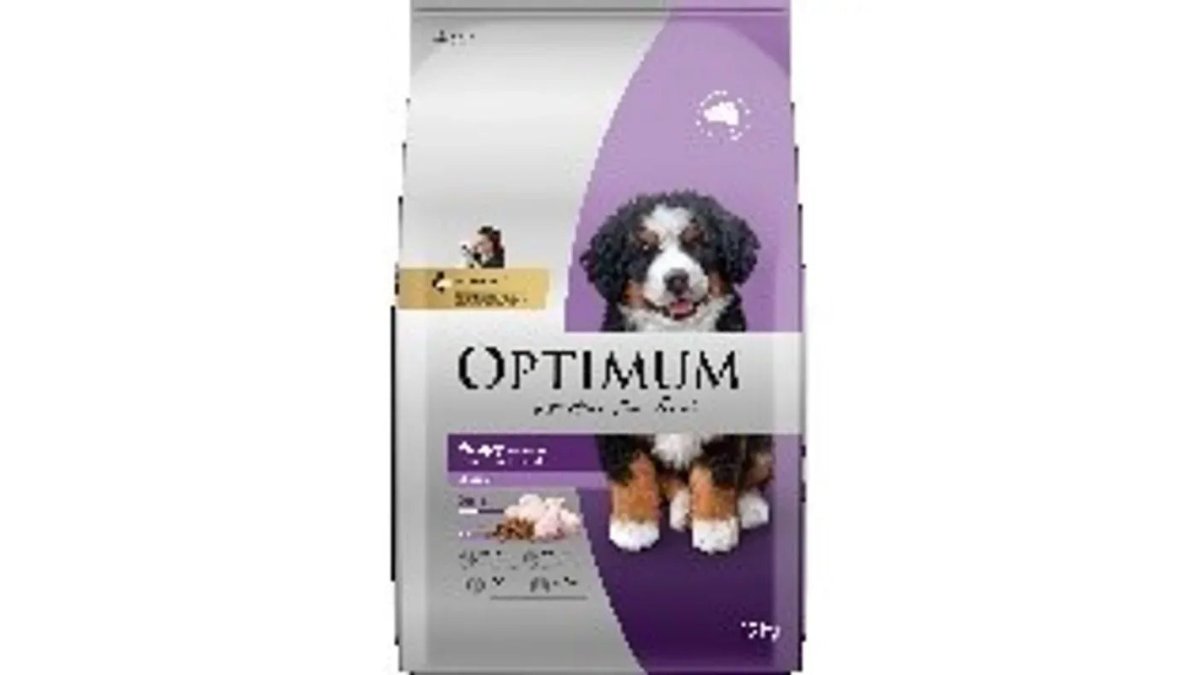
Optimum Puppy Large & Giant Breed Dry Dog Food Chicken 15kg →
Puppy Feeding Chart by Weight and Age
Use this as a rough guide only. Always check the label on your specific food.
| Puppy Age | Typical Meals per Day | Amount Guide |
|---|---|---|
| 8 to 12 weeks | 4 | Small, frequent portions |
| 3 to 6 months | 3 | Increase portions gradually |
| 6 to 12 months | 2 | Adjust by body condition |
| 12 months and up | 2 | Follow adult maintenance feeding |
Puppy food is designed for growth, so choose a formula labelled for puppies. Our range includes the Optimum Dog Dry Puppy Chicken 3Kg for smaller puppies and the Optimum Puppy Large & Giant Breed Dry Dog Food Chicken 15kg for larger breeds, which Optimum recommends for large breed puppies up to 24 months.


A Worked Example You Can Copy
The table above tells you how often to feed. To turn that into an actual amount, work through a single example from start to finish.
- Read the daily amount for the current weight: about 150 g per day.
- Divide by the number of meals for the age: 150 g ÷ 4 meals = about 37 g per meal.
- Weigh each portion on a kitchen scale rather than guessing with a scoop, because scoop density varies between foods.
- Re-check the bag every two to three weeks as weight climbs, and move to three meals around 3 to 4 months.
These gram figures are illustrative only. Always use the amount printed on your own bag and confirm with your vet for your puppy's expected adult size.
How Often to Feed a Puppy at Each Stage
Feeding frequency matters as much as portion size. Young puppies do best with several small meals.
A simple schedule:
- 8 to 12 weeks: Four meals a day
- 3 to 6 months: Three meals a day
- 6 months and up: Two meals a day, morning and evening
Feed at roughly the same times each day.
Calculating Daily Calories and Reading Food Labels
Calories tell you more than weight alone. The bag's feeding guide is built around that food's calorie density.
Step 1: Find the Calorie Density
Look on the label for the metabolisable energy (ME) figure. In Australia this is usually shown as kcal per 100 g, and sometimes also as kcal per cup. For example, a puppy dry food might list 370 kcal per 100 g. A wet puppy food might list 90 kcal per 100 g because of its moisture content.
Step 2: Estimate a Daily Calorie Target
A common starting point used by veterinary practitioners is roughly 130 to 150 kcal per kilogram of metabolic body weight (body weight in kg raised to the power of 0.75) for a growing puppy, then adjusted for age, activity and body condition. Rather than asking you to do that maths, most owners get a workable target from the bag's feeding guide for their puppy's current weight, then convert it.
Step 3: Convert Calories to Grams
- Divide the target by the calorie density: 550 ÷ 370 = about 1.49.
- Multiply by 100 to get grams: about 149 g per day.
- Divide by meals: 149 g ÷ 3 meals = about 50 g per meal.
Step 4: Recalculate When Anything Changes
Weigh food on a kitchen scale in grams rather than using a cup. Cup volume varies with kibble size and how tightly it is packed, so gram weights are far more consistent across bags and brands.
Optimum Puppy Large & Giant Breed Dry Dog Food Chicken 15kg →
Treats and Training Rewards Count Too
Stretching a daily portion works well too. A Kong Easy Treat Puppy toy lets you dispense part of a meal slowly, which keeps your puppy busy and stops fast eating.
How Much Wet Food to Feed a Puppy
When you add wet food, reduce the dry food by a similar calorie amount. Check the wet food label for its calorie content per tin or pouch, and aim for the same total daily energy. Mixing without adjusting is a common reason puppies gain weight.
How to Transition Puppy Food Safely
- Days 1 to 2: 25 percent new food, 75 percent old food
- Days 3 to 4: 50 percent new, 50 percent old
- Days 5 to 6: 75 percent new, 25 percent old
- Day 7 onwards: 100 percent new food
If your puppy has loose stools or refuses food, speak to your vet.
Adjusting Portions Using Body Condition and Growth
Watch out: Don't rely only on the scale. A puppy can gain weight from muscle and bone too, so pair the weight check with a hands-on body condition check.
Choosing the Right Puppy Food Range for Your Dog
Pick a food labelled for puppies.
For multi-puppy households, the Enduro Puppy 20Kg is a 20kg bag suited to growing puppies.

If you have questions about what suits your puppy, your vet is the best person to ask. Easy Pets offers fast, Australia-wide dispatch.
Frequently Asked Questions
How much food should I feed my puppy daily?
Daily amounts depend on your puppy's current weight, age, and expected adult weight, and the feeding guideline printed on the bag is the starting point. If you are unsure, ask your vet to confirm the amount for your individual dog.
How often should I feed my puppy?
Young puppies usually need several small meals a day, and frequency reduces as they grow. Many owners move from three meals to two somewhere around six months, though the right timing depends on the breed and the individual dog. Keep meals at consistent times so your puppy learns a routine and it is easier to spot changes in appetite. Fresh water should always be available.
How much wet food should I feed my puppy?
If you combine wet and dry food, reduce the dry portion by the calories in the wet food so total daily intake stays on track. Check the calorie information on the wet food pack, since energy density varies between products. Mixing wet food in gradually makes it easier to keep weight steady and avoid overfeeding. Confirm the total with your vet if you are feeding a mix of food types.
How do I switch my puppy to a new food?
If your puppy has loose stools, vomiting, or refuses to eat, speak to your vet.
