

Last Updated: November 25, 2026
Quick Summary
Yes, is omega 3 oil good for horses for most horses as a useful daily supplement, but it is not a magic fix. Omega-3 oil supplies essential fatty acids the horse cannot make itself, supporting cell membranes, immune function and normal inflammatory processes. It helps only when you pick the right source and feed it properly.
- There is no official daily omega-3 requirement for horses, so no universal target dose can be given.
- Fish oil supplies EPA and DHA directly, but it oxidises faster than plant oils once opened.
- One cup of oil supplies roughly the calories of two and a half cups of grain.
- Add oil in small steps over about four weeks to avoid loose manure or feed refusal.
- Give it eight to twelve weeks before judging results, and stop gradually if nothing changes.
Table of Contents
- What Omega-3 Oil Does for Horses
- Omega-3 vs Omega-6 for Horses: Why the Balance Matters
- What the Research Says About Omega-3 Benefits
- Fish Oil for Horses: Long-Chain EPA and DHA
- Flaxseed Oil for Horses: The Plant-Based Option
- Omega-3 Oil for Horses Dosage: Working Out How Much to Feed
- Introducing Oil Safely and Monitoring Results
- Choosing an Omega-3 Oil for Your Horse
- Frequently Asked Questions
What Omega-3 Oil Does for Horses
Is omega 3 oil good for horses? Yes, for most horses it is a useful daily supplement, but it is not a magic fix. Omega-3 oil supplies essential fatty acids the horse cannot make itself. These fats support cell membranes, immune function and normal inflammatory processes.
The honest answer is that omega-3 oil helps, but only when you pick the right source and feed it properly.
How Fatty Acids Work in the Equine Body
Essential fatty acids are fats a horse must get from feed. The body uses them in cell membranes and in the chemical messengers that manage inflammation.
- Omega-3 and omega-6 are both essential
- The horse cannot build either one from scratch
- Dietary fat also adds energy density to the daily ration
- Fat is digested and absorbed in the small intestine
Fresh pasture supplies some omega-3. Hay and grain-based feeds supply far less. That gap is why oil supplementation became common in equine nutrition.
Omega-3 vs Omega-6 for Horses: Why the Balance Matters
The balance between omega-3 and omega-6 matters more than the total amount of oil. Both families compete for the same enzymes. Feed too much omega-6 and the horse's body leans toward a more inflammatory state.
Most Australian horses eat hay, chaff and grain-based hard feed. Those feeds are heavier in omega-6 than fresh grass. So a horse on a dry-feed diet often needs more omega-3 to even things out.
Signs Your Horse's Fatty-Acid Balance May Be Off
There is no simple blood test your vet can run for this in the paddock. Instead, watch for slow, dull changes:
- A dry or scurfy coat that does not improve with grooming
- Poor hoof quality and slow hoof growth
- Stiffness that lingers after work
- Slow recovery after hard exercise
These signs have many causes. Treat them as a prompt to review the whole diet, not as proof of a fatty-acid deficiency.
What the Research Says About Omega-3 Benefits
The equine evidence is promising but not settled. Research from the University of Kentucky equine studies found that adding fish oil to exercising horses' diets lowered heart rate, plasma glycerol and free fatty acids. A University of Florida review of omega-3 supplementation found no evidence that growing horses suffered extra oxidative stress from omega-3.
A 2026 review of omega-3 fatty acids in horse nutrition describes possible benefits for airway inflammation, joints and cartilage. It also notes that low-dust management supports those effects.
Here is the part most guides skip. There is no official daily omega-3 requirement for horses, so no universal target dose can be given.
Fish Oil for Horses: Long-Chain EPA and DHA
Fish oil supplies EPA and DHA, the long-chain omega-3s, directly.
That efficiency is fish oil's main advantage. The trade-offs are real too:
- Palatability is hit and miss; some horses refuse it
- It oxidises faster than plant oils once opened
- It costs more per litre than flaxseed oil
Store it sealed, cool and out of sunlight. Smell it before each feed. A sharp, paint-like odour means it has turned.
Flaxseed Oil for Horses: The Plant-Based Option
Flaxseed oil is rich in alpha-linolenic acid, a shorter-chain omega-3. The horse must convert ALA into EPA and DHA.
So why choose it? Cost, palatability and a balanced fatty-acid profile. Our Equitec Omega 3 Flaxseed Oil 4.5L is 100 percent first cold pressed flaxseed oil, single ingredient and chemical free. It carries no starch or sugar, which suits horses on a controlled diet.
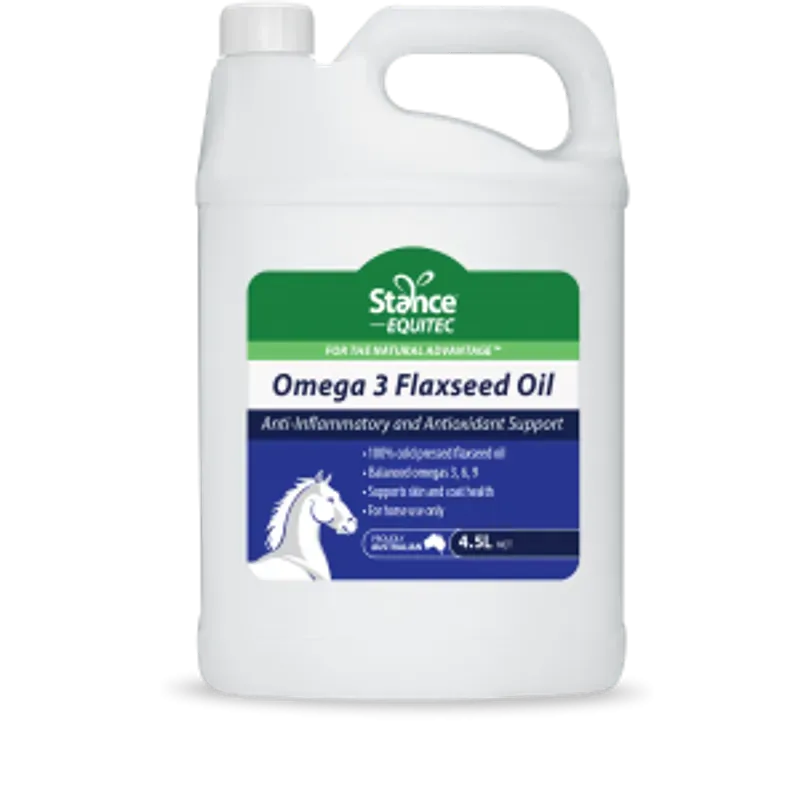
One cup of oil supplies roughly the calories of two and a half cups of grain. That matters if your horse is a good doer.
Omega-3 Oil for Horses Dosage: Working Out How Much to Feed
There is no official daily omega-3 requirement for horses, so no universal dose exists. That is not a cop-out, it is the single most important thing to understand before you buy a bottle. What you can do is work from three inputs: your horse's bodyweight, the product's EPA and DHA concentration, and what you are trying to achieve.
Start With Bodyweight, Not Tablespoons
A tablespoon is a volume, not a dose. Two oils can look identical in the bucket and deliver very different amounts of omega-3. Weigh your horse or use a weight tape, then read the label for the actual fatty-acid content per millilitre.
A Practical Starting Framework
Use this as a build-up guide, then adjust to the label and your horse:
| Horse Size | Starting Volume | Build-Up Period | Watch For |
|---|---|---|---|
| Pony under 300kg | 10-20ml daily | 2-3 weeks | Loose manure, feed refusal |
| Galloway 300-500kg | 20-40ml daily | 2-3 weeks | Reduced hay intake |
| Thoroughbred 500kg+ | 40-60ml daily | 3-4 weeks | Weight gain, loose manure |
Build-Up Period
These are volumes, not doses. Convert to grams of EPA and DHA using the label before you settle on a final amount. Product concentration varies widely between brands and between fish, flax and blended oils, so the label always wins over any table.
Match the Dose to the Goal
- General coat and skin support: a modest maintenance amount is usually enough.
- Joint stiffness or mobility: many owners feed toward the upper end of the bracket, alongside veterinary care.
- Airway or respiratory concerns: discuss with your vet first; oil is supportive, not a treatment.
- Performance and recovery: research on exercising horses has used fish oil, but doses in studies are not directly transferable to commercial products.
Watch out: doubling the dose because you see no change in a fortnight is the most common mistake. Fatty-acid changes in cell membranes take weeks, and excess oil adds calories and can loosen manure before it helps anything.
For a horse with a health condition, on medication, or prone to laminitis, ask your vet before you start. The calorie load alone can matter for a good doer.
The woman is Australian.
Introducing Oil Safely and Monitoring Results
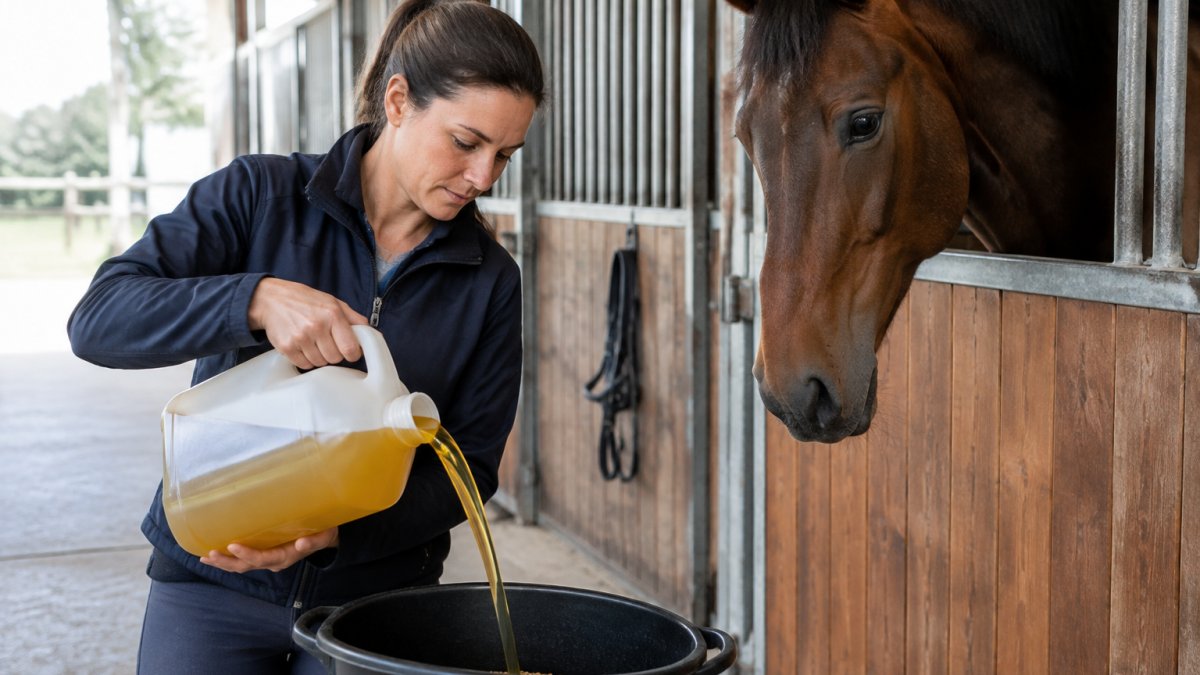
Add oil to the feed in small steps. Sudden large amounts can cause loose manure, a refused feed or reduced hay intake. The ramp below is a common pattern; adjust to how your horse eats and droppings look.
- Week one: one quarter of the target amount
- Week two: half of the target
- Week three: three quarters
- Week four: full amount, if the horse is coping
Mix it through dampened chaff or a soaked feed rather than pouring it over dry grain, so the oil coats the feed evenly and the horse cannot sort around it. Introduce it at the same feed each day so you can spot a refusal quickly.
Storage and Freshness
Oil goes rancid when exposed to heat, light and air. Keep the container sealed, store it cool and out of direct sunlight, and never pour from a dirty scoop or a wet funnel. Buy a size you will use within a few months rather than a bulk drum that sits in a hot feed shed. Smell the oil before each feed, a sharp, paint-like or bitter odour means it has turned, and feeding rancid oil does more harm than good.
Watch out: a horse that suddenly refuses a feed it previously ate may be telling you the oil has oxidised, not that it has gone off the feed itself. Check the oil before you change anything else.
What to Measure
Give it eight to twelve weeks before you judge. Track concrete signs rather than a general impression:
- Coat condition: photograph the shoulder and flank monthly in similar light.
- Hoof quality: note growth, cracks and sole condition at each farrier visit.
- Body weight and condition score: oil is calorie-dense, so monitor a good doer closely.
- Manure consistency: loose droppings are the most common early side effect.
- Respiratory signs: note cough, nasal discharge or exercise tolerance if airway health was the reason you started.
- Stiffness and recovery: ask your vet or coach for an objective check if mobility was the goal.
When to Stop or Ask for Help
If nothing changes after twelve weeks, the oil may not be the answer, and that is worth knowing before you buy another bottle. Stop gradually rather than abruptly, and review the whole ration. A supplement cannot fix poor forage, dusty hay or an underlying condition. If your horse develops loose manure that persists, loses weight unexpectedly, or has a health condition or medication regime, consult your vet before continuing.
Choosing an Omega-3 Oil for Your Horse
Pick the source first, then the size. Fish oil suits horses that need long-chain EPA and DHA directly. Flaxseed suits budget-conscious owners and fussy eaters.
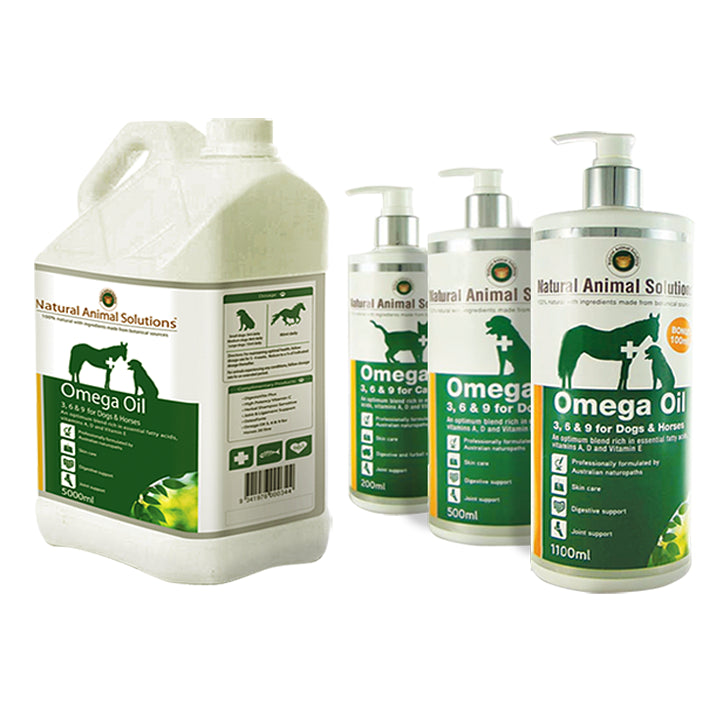
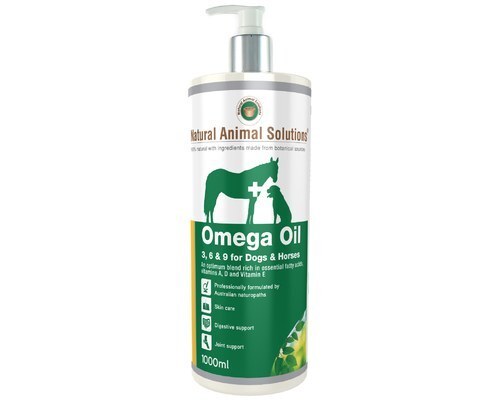
We stock two sizes of the Natural Animal Solutions Omega 3 6 9 range for horses and dogs, and a 5000ml bulk bottle if you are feeding more than one horse. If you are still comparing feeds overall, our premium horse feed brand comparison shows how the oils fit into a full ration.
One last thing. A supplement cannot fix poor forage. Fix the hay and the dust first, then add oil.
Choosing the right oil is the easy part. Getting a fresh, well-stored bottle to your gate is where most online orders fall short. Easy Pets is a family-run Australian retailer with more than 8,000 products for dogs, cats, horses and farm animals, sourced from trusted Australian manufacturers and distributors. Every order is packed by our own team and dispatched fast, Australia-wide. Get started with Easy Pets and feed your horse a fresher, better-stored oil.
Frequently Asked Questions
What are the benefits of omega-3 oil for horses?
Omega-3 fatty acids support cell membranes and normal inflammatory processes, which is why they are fed for joint comfort, airway health and coat condition. Published equine research has examined omega-3 supplementation for airway, joint and exercise-related outcomes, with findings that remain mixed and still developing.
How much omega-3 oil should I give my horse?
There is no National Research Council daily requirement for omega fatty acids in horses, so no universal dose exists. Work from the label rate for the product you buy, your horse's body weight and what you are feeding it for. Introduce oil gradually. One cup of flaxseed oil supplies roughly the calories of two and a half cups of grain. Ask your vet before feeding oil to a horse with a history of laminitis or weight issues.
Is fish oil safe for horses?
Fish oil supplies EPA and DHA directly. Start with a small amount and build up, because some horses refuse the taste at first. Stop feeding and call your vet if you notice loose manure, reduced appetite or a change in coat or skin. Horses on medication or with metabolic conditions should be cleared by a vet first.
Can horses get enough omega-3 from their regular feed?
Pasture and fresh forage supply some omega-3, while hay and grain-based feeds generally supply less. Whether a supplement is needed depends on the horse's diet and workload. If your horse's diet is mostly hay and hard feed, an omega-3 source is worth discussing with your vet or an equine nutritionist.
How long does omega-3 oil take to work in horses?
Keep a simple record of what you notice over time, such as coat condition and manure consistency, so you can compare against your starting point. If you see no change at a consistent dose, review the product, the amount and whether your horse's overall diet is meeting its needs.
