

Quick Summary
The best premium horse feed brands in Australia depend on your horse's workload and starch sensitivity. High fibre, low starch options such as Mitavite Xtra Cool suit light work and easy keepers, while Hygain Grand Prix Premium Muesli and Johnsons Platinum Low GI suit moderate to heavy work. Compare declared analysis and cost per day, not just bag price.
- Mitavite Xtra Cool starts at $41.95 for 20 kg and declares 14% starch.
- Omega Feeds No-Grain Gold declares 33.1% crude fibre and under 1% starch.
- Johnsons Platinum Low GI declares 16.2% protein, 5% fat and 14.6% NSC.
- Transition to a new feed over 7 to 14 days, mixing old and new gradually.
- Roughage should be 1 to 1.5% of bodyweight daily, per the manufacturers cited.
Table of Contents
- How We Chose the Premium Horse Feeds Compared Here
- Side-by-Side Comparison of Premium Horse Feeds
- Feeds Built for Light Work and Easy Keepers
- Performance and Moderate-to-Heavy Work Options
- How to Balance a Horse's Diet With Premium Feed
- Calculating Horse Feed Requirements by Bodyweight and Workload
- Equine Feeding Management Tips for Switching and Monitoring Feed
- Choosing Your Next Feed and Ordering From Easy Pets
- Frequently Asked Questions
How We Chose the Premium Horse Feeds Compared Here
Last Updated: November 4, 2026
We did not rank these feeds by formal trial. Instead, we looked at what each product is designed for: energy source, fibre and starch levels, protein, and the type of horse it suits.
We prioritised feeds with published declared analysis, since a feed you cannot check is a feed you cannot compare, and grouped feeds by workload.
A feed is only part of the diet, roughage, water and body condition all shape whether it works. Treat this guide as a starting point for a conversation with your vet or equine nutritionist.
Side-by-Side Comparison of Premium Horse Feeds
The table compares the feeds on the details that most often decide a purchase: type, starting price for a 20 kg bag, main workload, and declared analysis where published. Unpublished figures are marked as not stated rather than estimated.
| Feed | Type | Starting Price (20 kg) | Best For | Declared Protein | Declared Fibre | Declared Starch / NSC | Declared Fat |
|---|---|---|---|---|---|---|---|
| Mitavite Xtra Cool | High fibre, low starch complete feed | $41.95 | Paddock rest to moderate work, heat-sensitive horses | 12% | Max 20% | 14% starch | Not stated |
| Mitavite Cool Vitality | Micronised muesli | $45.95 | Pleasure riding to high performance | 15% | Not stated | Not stated | Not stated |
| Hygain Grand Prix Premium Muesli | Traditional muesli | $42.95 | Moderate to heavy work | Not stated | Not stated | Not stated | Not stated |
| Hygain Zero | Grain-free fibre pellet | $50.95 | Starch-sensitive and excitable horses | Not stated | Not stated | Not stated | Not stated |
| Pryde's EasiSport | Grain-free, low sugar pellet | $70.95 | Horses needing a low-starch, low-sugar diet | Not stated | Not stated | Not stated | Not stated |
| Omega Feeds No-Grain Gold | Grain-free, non-pelleted fibre feed | $57.95 | Grain-free full feeding with hay or pasture | Not stated | 33.1% | Under 1% starch | Not stated |
| Barastoc Complete Performer | Complete feed | $63.95 | General farm and property feeding | Not stated | Not stated | Not stated | Not stated |
| Johnsons Platinum Low GI | Low-GI pelleted cool feed | $56.95 | Medium to hard work, sustained energy | 16.2% | Not stated | 14.6% NSC | 5% |
| Monds Horse & Pony Pellets | Balanced pelleted ration | $28.95 | Forage-based diets across workloads | Not stated | Not stated | Not stated | Not stated |
| Laucke Equus Silver Pony Club Mix | High chaff, low grain cool feed | $44.95 | Light work and idle maintenance | Not stated | Not stated | Not stated | 8% oil |
Price is a useful filter but not the only one: a cheaper feed needing a larger daily volume can cost more per day than a premium feed fed in smaller amounts.
Reading the comparison columns
The protein column shows crude protein percentage, a rough guide to amino acid supply but not quality.
The fibre column is where premium feeds separate most clearly. Omega Feeds No-Grain Gold at 33.1% is at the high end here.
Check starch and NSC first for excitable, overweight or metabolically sensitive horses. A feed declaring 14% starch is moderate-starch rather than low-starch, even if marketed as cool.
The fat column is sparse because many manufacturers do not publish it. Where stated, 5% or more usually indicates added oil or a high-oil ingredient such as copra or full-fat soy.
What the comparison does not tell you
A table cannot capture digestibility, palatability or micronised grain quality, two feeds can declare the same protein and fibre and behave very differently in the bucket. Use the table to shortlist two or three feeds, then read each full ingredient list and check the feeding rate for your horse's weight.
A feed described as 'cool' or 'low GI' is not automatically low in starch. Always check the declared starch or NSC figure on the analysis panel, and if it is not published, ask the manufacturer before you buy.
Feeds Built for Light Work and Easy Keepers
Light work and easy keepers need energy without excess. For a horse on paddock rest or gentle work, a high fibre, low starch option is usually sensible.
Mitavite Cool Vitality is a micronised muesli positioned for pleasure riding through to high performance, built around a cool, conditioning energy source with 15% protein.

Laucke Equus Silver Pony Club Mix is a high chaff, low grain option for light work and idle maintenance, with 8% vegetable oil supplying energy without relying on grain.
Performance and Moderate-to-Heavy Work Options
Horses in regular or heavy work burn more energy and need feeds that keep up.
Hygain Grand Prix Premium Muesli is a traditional muesli for hard-working horses, blending micronised grain, oats and lucerne chaff to encourage chewing and fibre digestion.
Omega Feeds No-Grain Gold is a grain-free, non-pelleted fibre feed with 12 MJ/kg digestible energy and 33.1% crude fibre.
Johnsons Platinum Low GI is a low-GI pelleted cool feed built on high fat and fibre sources.
How to Balance a Horse's Diet With Premium Feed
A premium feed works best as one part of a balanced diet, and the rest is roughage. Mitavite specifies roughage at 1 to 1.5% of bodyweight daily, while Hygain's Zero advises at least 1.5%.
Balance also means matching feed to life stage and condition: a growing horse, a broodmare and an idle pony have different needs. Johnsons Platinum Low GI states it suits growing, breeding and spelling horses.
Know the difference between a complete feed and a concentrate.
Finally, do not add vitamins or minerals without professional guidance. Hygain advises against adding extra vitamins or minerals to its Zero feed without professional guidance.
Calculating Horse Feed Requirements by Bodyweight and Workload
Feeding rates are set by bodyweight and workload, so start by estimating your horse's weight with a weight tape, or a vet or weighbridge for a more reliable figure. Use your own measurement, not a breed average.
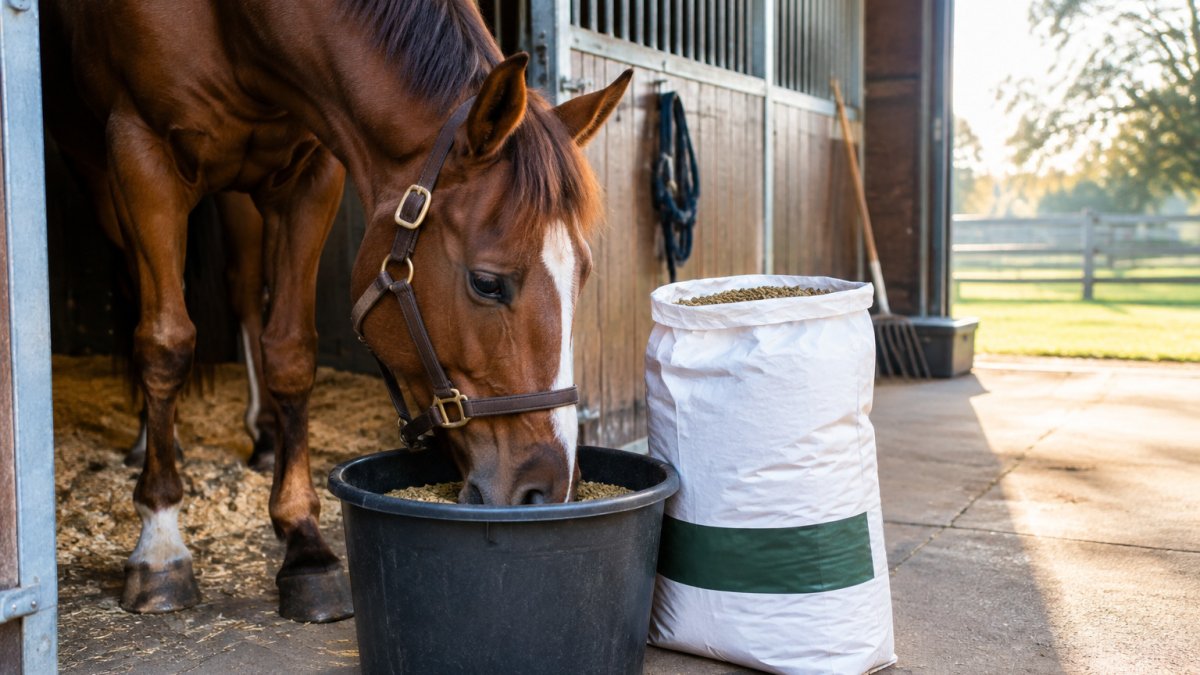
Once you have a weight, the manufacturer's feeding guide gives a daily range in kilograms. The table below shows how the published rates scale for a 500 kg horse across the feeds in this guide where a rate is stated.
| Feed | Per-Meal Limit |
|---|---|
| Mitavite Xtra Cool | Not stated |
| Monds Horse & Pony Pellets | 2.5 kg per meal, no more than half daily intake at once |
Turning the rate into a cost per day
Price per bag is a poor guide to value because bag sizes and feeding rates differ. The useful figure is cost per day, which you calculate by dividing the bag price by the bag weight to get a cost per kilogram, then multiplying by the daily feeding rate.
Mitavite Xtra Cool at $41.95 for 20 kg works out to about $2.10 per kilogram; at 2.5 kg a day for a 500 kg horse in light work, that is roughly $5.25 per day. Monds Horse & Pony Pellets at $28.95 for 20 kg is about $1.45 per kilogram, and at 2.0 kg a day roughly $2.90 per day. The gap is real, but so is the difference in what each feed is designed to do.
Run the same calculation for any feed on your shortlist: a premium feed fed at a lower rate can cost less per day than a budget feed fed at a higher rate.
Adjusting the rate over time
Start at the lower end of the published range for your horse's workload, then adjust every two to three weeks based on body condition, energy under work and appetite. If the horse is losing condition, move up within the range before adding a new product; if gaining weight or becoming excitable, move down and check starch and sugar levels. Do not exceed the per-meal limit on the bag.
Feeding guides are written for the average horse and assume the roughage portion is already in place. If your horse is on poor pasture or limited hay, fix the forage first rather than simply increasing the concentrate.
Equine Feeding Management Tips for Switching and Monitoring Feed
Hygain advises 7 to 14 days for Zero, Omega suggests 10 to 14 days for No-Grain Gold, Ridley recommends two weeks for Monds, and Johnson's suggests 1 to 2 weeks for Platinum Low GI.
Here is a practical transition approach:
- Days 1 to 3: Mix roughly a quarter of the new feed with three quarters of the old.
- Days 4 to 7: Move to half and half.
- Days 8 to 10: Use three quarters new feed.
- Day 11 onward: Feed the new product alone at the correct rate.
Adjust the timing if your horse has a sensitive gut, and slow down if you see changes in droppings, appetite or behaviour.
Monitoring matters as much as the switch: check body condition every few weeks, watch the coat and hooves, and note energy levels under work.
Store feed in a dry, cool place, with bags off the ground and away from rodents.
Choosing Your Next Feed and Ordering From Easy Pets
Start with three questions: how hard does your horse work, does it struggle with starch or sugar, and how much roughage can you provide? Light-work and easy-keeping horses usually suit high fibre, low starch options such as Mitavite Xtra Cool or Laucke Equus Silver; moderate to heavy work often suits muesli or pelleted feeds like Hygain Grand Prix Premium or Johnsons Platinum Low GI; starch-sensitive horses may benefit from grain-free options such as Hygain Zero, Pryde's EasiSport or Omega's No-Grain Gold.
Once you have a shortlist, compare declared analysis, feeding rate for your horse's weight and price per day, not just price per bag.
You can browse the full range of horse feeds at Easy Pets, where each product page shows the bag size, price and manufacturer details. Mitavite Xtra Cool is a practical starting point for light work, while Hygain Grand Prix Premium Muesli suits horses in regular work. For horses that need a grain-free diet, Omega Feeds No-Grain Gold Horse Feed is worth a look. If you want to understand the ingredients behind the options, the copra, lupins and beet pulp pros and cons article breaks down these common feed components.


Feeding a horse well is a long-term commitment. Choose a feed you can keep using consistently, and review it with your vet if your horse's needs change.
Frequently Asked Questions
What are the most reputable horse feed brands in Australia?
The premium feeds compared in this guide are sold by Easy Pets and include Mitavite, Hygain, Pryde's, Omega Feeds, Barastoc, Johnsons, Monds and Laucke. Reputation depends on what your horse needs, so judge each feed on its declared analysis, ingredient list and feeding guide rather than brand name alone. Check the bag label for digestible energy, protein, fibre and starch, and match those figures to your horse's workload.
How do I choose the right premium feed for my horse's workload?
Start with workload. Light work and idle horses generally need lower energy feeds, while moderate and heavy work need more energy and protein. Mitavite Xtra Cool suits paddock rest through moderate work, Hygain Grand Prix Premium is intended for moderate to heavy work, and Laucke Equus Silver suits light work and maintenance. Confirm the feeding rate on the bag for your horse's bodyweight and adjust after monitoring body condition for several weeks.
How much does premium horse feed cost per bag in Australia?
Easy Pets lists 20kg bags from $28.95 (Monds Horse & Pony Pellets) to $70.95 (Pryde's EasiSport Grain Free Low Sugar Pellet), all in AUD. Cost per day depends on the feeding rate, so divide the bag price by the number of days it lasts at your horse's rate. A cheaper bag fed at a higher daily volume can cost more per day than a dearer, more concentrated feed.
Do I need to supplement premium horse feed with vitamins?
Many complete feeds already include vitamins and chelated minerals, and Hygain advises against adding extra vitamins or minerals without professional guidance. Feeds such as Mitavite Xtra Cool and Hygain Zero list premium vitamin and mineral premixes. Before adding a supplement, check the feed's declared mineral levels and speak to a vet or equine nutritionist, particularly if your horse is in heavy work or has a specific health concern.
