

Last Updated: November 21, 2026
Quick Summary
Most horses do not need a supplement, so first check the forage and diet for real gaps. High quality horse supplements have fully declared ingredient amounts, a feeding rate matched to the horse's weight and workload, batch-specific testing, and a traceable manufacturer.
- Start with forage quality and hay analysis before buying any supplement.
- Choose a product only after you can name the exact nutritional gap it fills.
- Look for ingredient amounts per kilogram or serving, not just ingredient names.
- Add up nutrient totals across all products to avoid harmful cumulative excess.
- Match each certificate of analysis to the batch number on your tub.
Table of Contents
- Start With the Basic Diet: Does Your Horse Need a Supplement at All?
- What Makes a Horse Supplement High Quality?
- How to Read a Horse Supplement Label: A Practical Checklist
- Testing, Certification and Contamination Controls
- Competition Rules, Prohibited Substances and Your Horse's Discipline
- Interactions, Cumulative Intake and When to Stop
- Choosing Your Next Supplement With Easy Pets
- Frequently Asked Questions
Start With the Basic Diet: Does Your Horse Need a Supplement at All?
Most horses do not need a supplement to stay healthy, and that is the first thing to settle before you spend a cent on high quality horse supplements. Many owners reach for a tub because the product looks reassuring, not because the horse's diet has a gap. A pantry of supplements can build up quickly when nobody has checked what the horse already eats.
The sensible starting point is the basic diet, not the product shelf.
A decision tree for whether to supplement
Work through these questions in order and stop as soon as you reach a clear answer:
- Is the horse getting good-quality forage in adequate amounts? If not, fix the forage before anything else.
- Is the horse in work, competition or a demanding life stage? Higher workloads raise nutrient needs, so the diet may need adjusting.
- Has a vet or equine nutritionist identified a specific deficiency or health condition? If yes, supplement to that specific need.
- Is the horse a good doer that gains weight easily, or a poor doer that struggles to hold condition? Each calls for different products.
- Can you name the exact gap you are trying to fill? If you cannot, you are probably buying hope rather than nutrition.
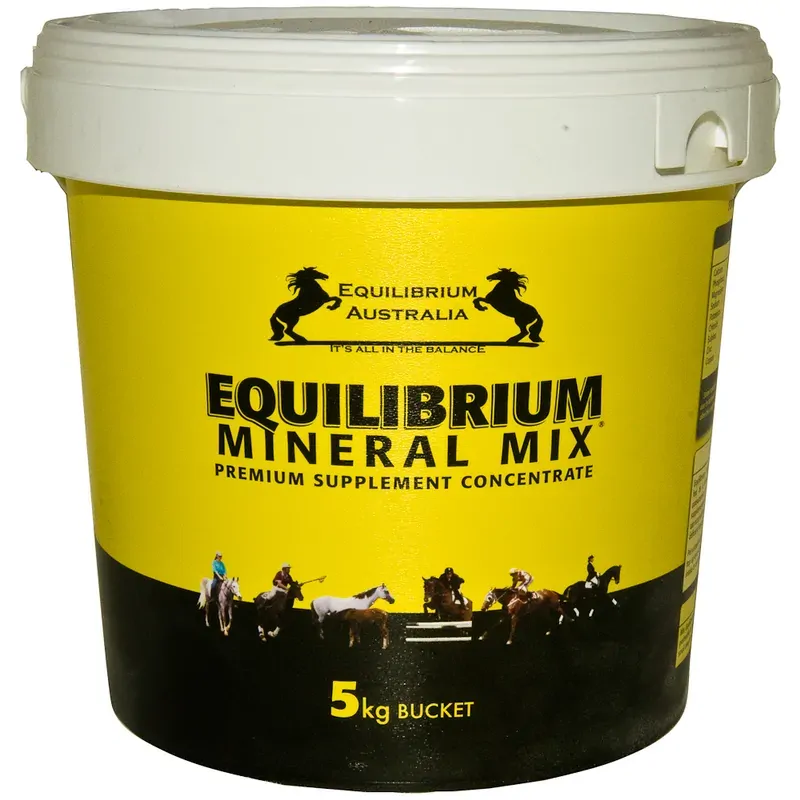
If the honest answer to question 5 is "no", a balancer or a broad vitamin and mineral product may be the most you need. Products such as the Equilibrium Mineral Mix 5kg Tub are built around filling mineral gaps in a forage-based diet, which is why they suit many horses better than a long list of single-purpose supplements.
Forage quality and why hay analysis comes first
Forage is the foundation of the diet. Hay quality varies enormously from paddock to paddock and season to season, so the mineral and vitamin content of your horse's feed can differ from what a label assumes. Hay or pasture analysis gives you real numbers to work from, and it is the most reliable way to see what is missing before you choose a supplement.
What Makes a Horse Supplement High Quality?
A high quality horse supplement is one whose ingredients are clearly declared, whose nutrient amounts are stated in measurable terms, and whose manufacturer can show how the product is made and tested. The same attention to declared ingredients, measurable amounts, and transparent testing also helps when verifying livestock supplement quality.
Look for four things. The first is a full ingredient declaration with nutrient amounts per kilogram or per serving. The second is a feeding rate that matches your horse's weight and workload. The third is evidence that the product's claims have been tested, not only described. The fourth is a manufacturer you can contact and question directly.
Evidence grading for product claims
Not all claims carry the same weight. Grade them before you trust them:
- Strong: Claims supported by controlled research on the product itself, in horses.
- Moderate: Claims supported by research on the individual ingredients, or by a clear manufacturing and testing record.
- Weak: Claims based on testimonials, general wellness language or research on a different species.
Treat a claim with no product-specific evidence as unproven, however confidently it is written.
Red flags in supplement manufacturing
Be wary of any product that:
- Names an ingredient without stating how much of it is in each serving.
- Makes disease-treatment claims rather than describing nutritional support.
- Gives no batch number, manufacturing location or contact details.
Any one of these is worth a question. Several together is a reason to walk away.
How to Read a Horse Supplement Label: A Practical Checklist
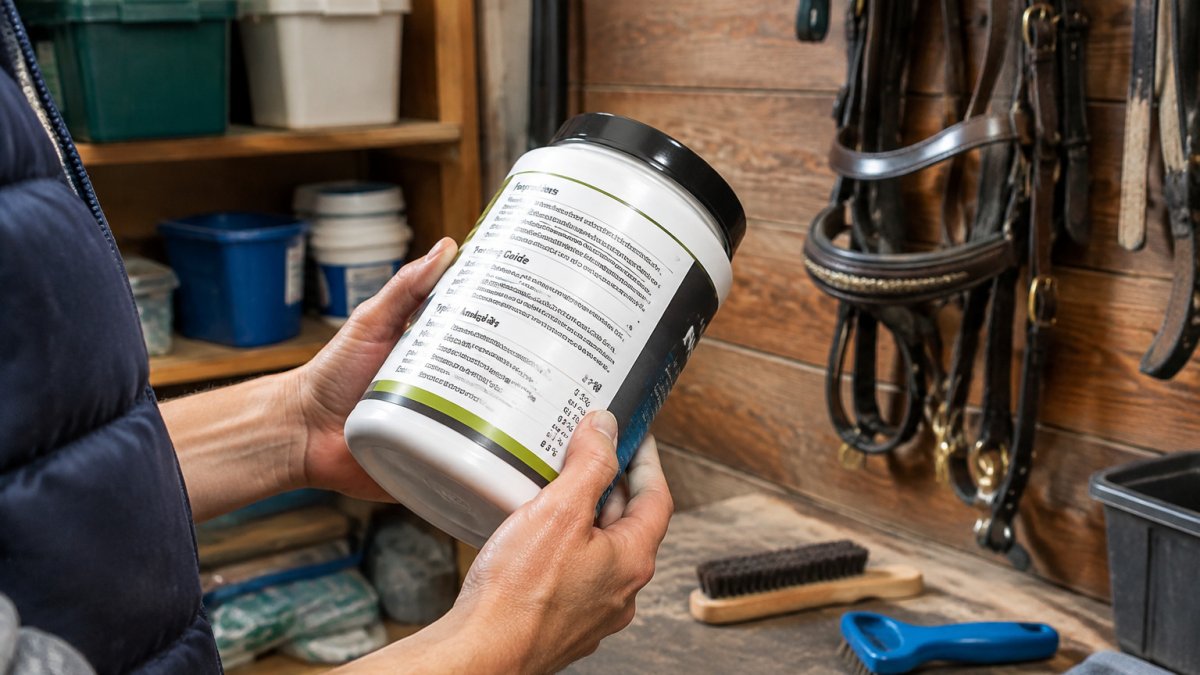
Reading a label properly takes about five minutes and prevents most bad purchases. Work through this checklist before any product goes into the feed room:
- Is the product name matched to the horse's actual need, not just its marketing?
- Is every active ingredient listed with an amount, not just a name?
- Are the nutrient amounts stated per kilogram or per serving, so you can compare products?
Worked example: checking a mineral balancer
Take the Equilibrium Mineral Mix 5kg Tub as an example. Its listing states it provides calcium 127 g, phosphorus 80 g, magnesium 60 g and sodium 88 g per kilogram, along with zinc 2,100 mg, copper 980 mg and selenium 9 mg per kilogram.
To check it, first confirm the rate suits your horse. A horse in light work needs far less than one in heavy work, so the scoop table matters. Then ask whether your hay already supplies these minerals.
Comparing two products on the same nutrients
The checklist only becomes powerful when you use it to compare products rather than judge one in isolation.
- Convert each label to a daily amount. If a product states 2,100 mg of zinc per kilogram and the feeding rate is 70 g per day, the daily zinc is 2,100 × 0.07 = 147 mg. Do the same for every shared nutrient.
- Compare like with like. A product quoting amounts per kilogram will always look stronger than one quoting per serving, so convert both to the same basis before you judge.
- Check the serving size against your horse's weight. A rate designed for a 500 kg horse is not the right rate for a 300 kg pony, and a label that gives only one rate for all horses is a warning sign.
- Add the totals across every product you feed. If your balancer already supplies 147 mg of zinc and a separate hoof product supplies another 100 mg, the horse is receiving 247 mg before you have counted the hay.
- Look for vague proprietary blends. A blend that lists ingredients without amounts cannot be compared, checked against forage analysis, or added up safely. Treat it as unquantified until the manufacturer provides numbers.
Watch out: a common trap is comparing the headline number on the front of the tub rather than the amount per daily serve.
The same method applies to any product: match the stated amounts against your forage analysis and your horse's workload before you buy.
The checklist below summarises the label checks the article recommends before buying a horse supplement.
| Check | What to confirm | Why it matters |
|---|---|---|
| Ingredient amounts | Each active ingredient has an amount, not just a name | Lets you compare products |
| Units | Amounts stated per kilogram or per serving | Makes products comparable |
| Feeding rate | Rate matches horse's weight and workload | Avoids under- or overfeeding |
| Daily total | Rate plus current feed makes a sensible intake | Checks cumulative intake |
| Batch details | Batch number, expiry date and storage instruction | Traces the product |
| Manufacturer | Contact details on label or website | Allows questions and accountability |
| Claims | No unsupported disease-cure language | Signals credible marketing |
Testing, Certification and Contamination Controls
Independent testing is one of the strongest signals of quality, because it checks the product against what the label says rather than relying on the manufacturer's word. But "tested" is a broad word, and the value of a test depends entirely on what was tested, by whom, and whether the result is tied to the batch you are holding.
What different tests can and cannot verify
- Ingredient identity testing confirms that the material in the tub is what the label names. It does not confirm the amount.
- Nutrient assay testing measures the actual concentration of a vitamin or mineral in a batch. This is the test that catches a product that has lost potency in storage or was underfilled at manufacture.
- Contamination screening looks for unlisted substances such as heavy metals, mycotoxins or prohibited substances. It can only detect what the laboratory is specifically looking for, so a "clean" result is only as broad as the panel used.
A common pattern is for a manufacturer to test raw materials on arrival but not the finished product, or to test one batch and market the whole range on that result. Neither is worthless, but neither verifies the tub in front of you.
A verification process you can run yourself
- Ask which laboratory did the testing. An independent, accredited laboratory carries more weight than an in-house check, because it removes the conflict of interest.
- Ask whether the result is batch-specific. Match the batch number on the tub to the certificate or result the manufacturer provides.
- Ask what the panel covered. A nutrient assay and a prohibited-substance screen answer different questions; ask for both if both claims are made.
- Ask for the result in writing. A manufacturer that can email a batch certificate is giving you evidence. One that offers only verbal reassurance is not.
- Check the manufacturing location and licence. A named, contactable manufacturing site with a quality system is easier to hold to account than an unnamed contract facility.
Watch out: a certificate of analysis that lists only the raw materials, or that carries no batch number, does not verify the finished product you are feeding.
Contamination is the other concern. Supplements can carry unlisted substances if raw materials or manufacturing lines are not controlled. Clean manufacturing practices, traceable ingredient sourcing and batch-level records all reduce that risk. A manufacturer that can show these controls is giving you evidence, not reassurance.
Competition Rules, Prohibited Substances and Your Horse's Discipline
If your horse competes, check the rules of your discipline and governing body before you buy. Some ingredients that are harmless in a pasture horse may be prohibited in competition, and an unlisted ingredient can cause a positive test.
Where a product is marketed for performance, ask the manufacturer directly whether it has been screened against competition prohibited-substance lists. A clear answer is a good sign. Vague reassurance is not.
Interactions, Cumulative Intake and When to Stop
Supplements add up. A balancer, a vitamin product and a joint or calming supplement may each look modest on their own but together deliver far more of a nutrient than the horse needs.
Monitor the horse after you start. Watch body condition, coat, hoof quality, energy and digestive health over several weeks. If nothing improves, or problems appear, stop the new product and talk to your vet or equine nutritionist.
Choosing Your Next Supplement With Easy Pets
Once you have confirmed the gap, the label and the feeding rate, choosing the right product becomes much simpler. Easy Pets is an Australian family-owned online retailer with over 8,000 products for dogs, cats, horses and farm animals, and our range includes supplements for horses. You can compare the mineral and vitamin options for your horse to find the one that matches your forage analysis and workload.
Frequently Asked Questions
How can you tell if a horse supplement is high quality?
Look for a clear ingredient list with stated amounts per kilogram or per serving, a batch or lot number, a manufacturer you can contact, and feeding directions that match the product's purpose. Quality also depends on evidence: check whether the product has been studied in horses, not just whether its ingredients are known to be useful. Independent batch testing and a supplier willing to share certificates of analysis are strong signs of a reliable product. Vague claims such as 'boosts immunity' with no measurable amounts should prompt caution.
What should you look for on a horse supplement label?
Check the active ingredients and their concentrations, the recommended daily dose and how it scales with bodyweight and workload, the batch number and best-before date, and the manufacturer's details. Compare the stated nutrient levels with your horse's base diet so you do not double up on vitamins or minerals. Note any warnings about pregnancy, laminitis or medication interactions. A label that hides doses behind proprietary blends makes it hard to judge value or safety.
How do you know whether your horse needs a supplement?
Start by analysing your forage, since hay and pasture quality determine most of the nutrients your horse receives. Compare what the base diet supplies against your horse's age, workload, health status and body condition. A horse on good-quality forage with adequate concentrate feed often needs little beyond a salt and mineral source. Work with your veterinarian or an equine nutritionist if you suspect a deficiency, because guessing at a gap often leads to unnecessary supplementation.
Are horse supplements regulated in Australia?
Check the product label for registration or licensing information, as regulatory requirements for horse supplements can vary between products. Check the product label for registration or licensing information and look for manufacturers that publish their formulations. Where a horse competes, check the rules of the governing body, because prohibited substance lists may apply to some ingredients regardless of where the product was bought.
Can horse supplements interact with medications?
Yes. Some supplement ingredients can affect how medications are absorbed or processed, and high doses of certain minerals or vitamins can cause problems over time. Tell your veterinarian about every supplement your horse receives, including mineral licks and feed additives, before starting any new medication. Keep a written record of products and doses so the total intake from all sources can be calculated. Never combine supplements with prescription treatment without veterinary advice.
