

Last Updated: November 26, 2026
Quick Summary
To read pet food labels, work through five sections in order: product name, ingredient list, guaranteed analysis, nutritional adequacy statement and feeding directions. Ingredients are listed by weight, while the guaranteed analysis gives minimum and maximum nutrient percentages, so read both together and convert to dry matter when comparing formats.
- Ingredients appear in descending order by weight, so the top ingredient makes up the largest share of the food.
- The guaranteed analysis lists legal minimums and maximums for crude protein, fat, fiber and moisture, not measured averages.
- Convert nutrients to dry matter with (nutrient % ÷ (100 - moisture %)) × 100 to compare dry, wet and fresh foods fairly.
- Look for a nutritional adequacy statement naming a life stage such as adult maintenance, growth or all life stages.
- Ignore marketing terms like premium, natural and holistic and read the regulated sections on the back instead.
Table of Contents
- Start With the Label Basics
- The Pet Food Ingredients List Explained
- What the Guaranteed Analysis Actually Tells You
- Complete and Balanced Pet Food Meaning
- Check the Life Stage and Feeding Directions
- How to Compare Pet Food Labels Across Dry, Wet and Fresh
- Red Flags and What to Ignore on a Label
- Choosing Your Next Bag With Confidence
- Frequently Asked Questions
Start With the Label Basics
Learning how to read pet food labels starts with knowing what you are actually looking at. A pet food label is a regulated information panel, not a marketing brochure, and it carries five distinct sections that each answer a different question. This guide walks through each section in the order it appears.
Most shoppers read the front of the pack and stop there. That is the one section with the least regulation and the most persuasion.
The Five Sections Every Label Carries
- Product name - the front-of-pack title, which has rules but plenty of wiggle room
- Ingredient list - every ingredient, in descending order by weight
- Guaranteed analysis - the nutrient percentages by weight
- Nutritional adequacy statement - how the food meets nutritional standards
- Feeding directions - how much to feed, based on bodyweight
The ingredient list and guaranteed analysis are where the real information sits. Everything else is context.
The Pet Food Ingredients List Explained
The pet food ingredients list explained in plain terms is simply this: ingredients appear in descending order by weight, so whatever sits at the top makes up the largest share of the food.
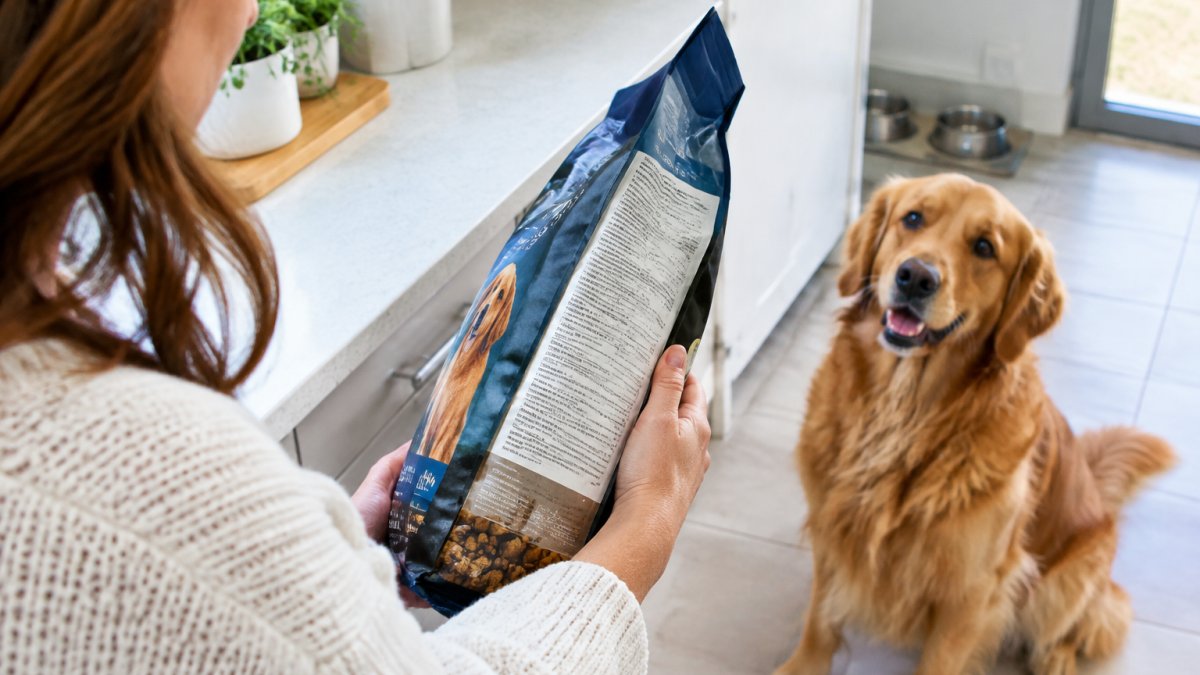
Weighing matters more than counting. A fresh meat listed first may weigh a lot but contain mostly water, which drops out during cooking. That is why the order alone never tells the full story.
Named Proteins and Generic Meat Terms
A named protein tells you exactly what animal it came from: chicken, turkey, salmon, beef. A generic meat term does not. "Meat meal" or "animal by-products" could mean several species, and the label is not required to say which.
Look for named animal proteins first. "Chicken meal" is a concentrated form and often a better protein source by weight than fresh chicken. "Poultry meal" is vaguer.
Generic terms are not automatically bad, but they give you less to work with. If your dog has a sensitive stomach, named proteins make it easier to track what works.
Ingredients Versus Nutrients
Ingredients versus nutrients is the distinction that trips up most shoppers. Ingredients are what went into the food. Nutrients are what your pet absorbs: crude protein, crude fat, vitamins, minerals.
A food can list quality ingredients and still miss the nutrient profile your pet needs. The guaranteed analysis is where nutrients live, which is why you should read both sections together.
What the Guaranteed Analysis Actually Tells You
The guaranteed analysis is a set of minimum and maximum percentages for key nutrients: crude protein, crude fat, crude fiber, and moisture. The word to hold onto is "guaranteed", these are legal floors and ceilings, not measured averages.
Here is what each line means:
- Crude protein, a minimum, so the food has at least this much
- Crude fat, a minimum, driving energy and coat condition
- Crude fiber, a maximum, supporting digestion
- Moisture, a maximum, and the number that skews everything else
A common pattern is for a manufacturer to formulate well above the guaranteed minimum so that batch-to-batch variation never breaches the label. That is good practice, but it also means two foods with identical guaranteed analyses can differ meaningfully in what they actually deliver.
Why Crude Percentages Have Limits
Crude percentages are measured by weight, water included. A wet food might show 10% protein while a dry food shows 30%, yet the wet food could deliver more protein once you remove the water.
There is a second limit. "Crude" protein is estimated from nitrogen content, not measured directly, so it does not tell you about amino acid balance or digestibility. "Crude" fat is a total ether extract and says nothing about the ratio of omega-3 to omega-6 fatty acids.
Getting More Detail Than the Label Shows
When you need exact figures, for a pet with a diagnosed condition, a suspected intolerance, or a prescription diet, the guaranteed analysis is not enough. Most manufacturers hold a more detailed nutrient profile, often called a typical analysis or product specification, and many will supply it on request. Ask specifically for:
- Typical (as-formulated) values for protein, fat, fiber, and moisture, not just the guaranteed minimums and maximums
- Calories per 100 g and per cup or can, so you can compare energy density
- The full vitamin and mineral inclusion levels, particularly calcium, phosphorus, and the calcium-to-phosphorus ratio
- Whether the finished product is tested batch by batch, and what the testing covers
One that cannot, or that refers you back to the bag, is telling you something too. For a pet with a health condition, take the typical analysis to your veterinarian rather than adjusting the diet yourself, a veterinary-directed diet is formulated differently from a maintenance food, and the label alone will not tell you which is appropriate.
Complete and Balanced Pet Food Meaning
Complete and balanced pet food meaning comes down to one claim: the food meets a recognised nutritional standard for a specific life stage, on its own, without supplements.
Look for a nutritional adequacy statement that names the life stage. Common wording includes "adult maintenance", "growth", or "all life stages". A food labelled complete and balanced for adult maintenance is not automatically right for a puppy.
If you want to go deeper on matching a diet to your dog, our guide on how to choose a complete and balanced dog food walks through the decision in more detail.
Check the Life Stage and Feeding Directions
Life stage and feeding directions are the two lines shoppers skim and vets check first. Puppies, adults, and seniors have different nutrient needs, and the label should state which one the food is built for.
Feeding directions set the daily amount by bodyweight. Start there, then adjust based on body condition, activity, and calorie content.
Watch out: feeding to the bag's suggested amount without checking your pet's body condition can lead to weight gain. Weigh your pet, feel the ribs, and adjust from the label's starting point.
How to Compare Pet Food Labels Across Dry, Wet and Fresh
Comparing pet food labels across dry, wet and fresh foods requires one adjustment: convert everything to dry matter. This lets you line up crude protein, crude fat, and calorie content on equal footing.
Here is the formula:
Dry matter % = (nutrient % ÷ (100 - moisture %)) × 100
A worked example:
| Format | Moisture | Crude Protein (as fed) | Dry Matter Protein |
|---|---|---|---|
| Dry kibble | 10% | 30% | 33% |
| Wet food | 78% | 10% | 45% |
| Fresh-style | 70% | 12% | 40% |
Moisture
The wet food looks weakest on the pack but leads once you adjust. That is why dry-matter comparison is the only fair way to compare foods.
For a fresh-style option worth evaluating, our Vets All Natural Complete Mix 15kg bag for adult and senior dogs is a real example you can put through this formula yourself.
Red Flags and What to Ignore on a Label
Red flags on a pet food label are usually words, not numbers. Marketing terms like "premium", "natural", and "holistic" have loose definitions and no fixed standard behind them, so they tell you nothing you can verify. Ignore them and read the regulated sections instead.
What to look for instead:
- A named nutritional adequacy statement with a life stage
- Named animal proteins near the top of the ingredient list
- A guaranteed analysis with realistic crude protein and fat figures
- Clear feeding directions by bodyweight
What to avoid:
- Vague meat terms with no species named
- Missing or unclear adequacy statements
- Heavy front-of-pack claims with no matching detail on the back
- A "natural" claim paired with artificial preservatives in the ingredient list, the two cannot both be true
How to Verify a Claim Before You Buy
A claim you cannot check is a claim worth discounting. The practical move is to treat the front of the pack as a question and the back as the start of the answer, then put the remaining questions to the manufacturer directly. A short, specific list gets a useful reply:
- Which specific animal species does each named protein come from, and is the meat fresh, frozen, or rendered into meal?
- Where are the ingredients sourced, and can you confirm the country of origin for the main protein?
- Is the finished product tested for nutrient content, and how often?
- Who formulates the diets, and is a qualified animal nutritionist involved?
- Can you send the typical nutrient analysis and calorie content per 100 g?
A manufacturer with a genuine quality process should be able to answer these questions clearly. Vague or evasive replies are themselves a red flag.
Who Can Answer Technical Questions
That is why the questions above matter: the label is a declaration, and the manufacturer is the party that has to stand behind it.
If origin claims matter to you, our breakdown of whether Australian-made pet foods are actually better for pets looks at what those labels really promise.
Choosing Your Next Bag With Confidence
Choosing your next bag gets easier once you read labels in a fixed order. Start with the adequacy statement, move to the ingredient list, check the guaranteed analysis, then convert to dry matter if you are comparing formats.
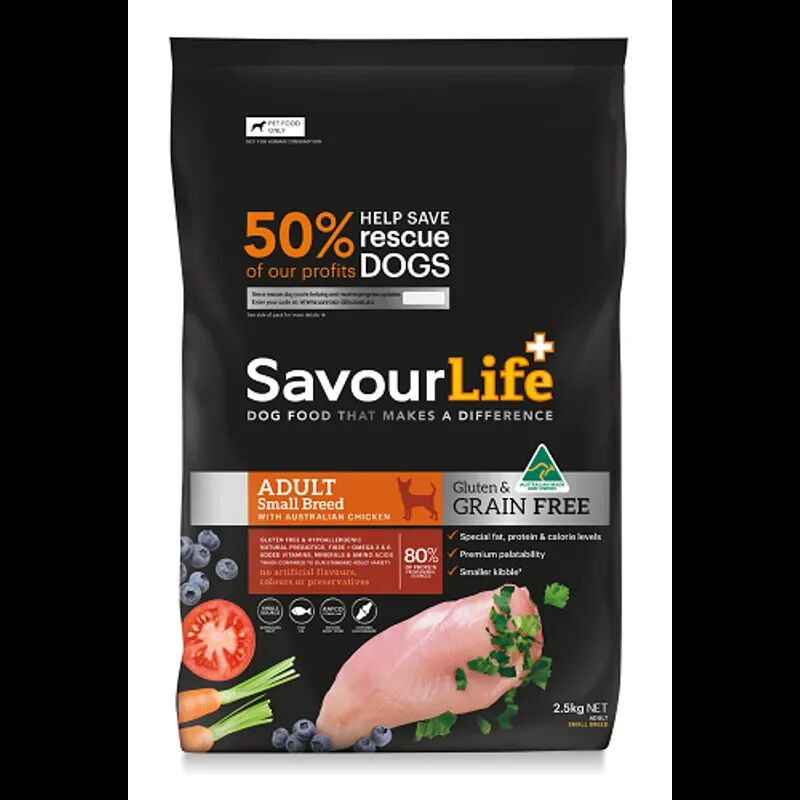
A practical example: our SavourLife Grain Free Small Breed Adult Chicken dry dog food 2.5kg is a complete dry kibble for adult dogs, and the pack carries the full ingredient list and guaranteed analysis for you to run through every step above.
The label is not trying to trick you. It is just that the useful parts sit on the back, in small print, in a fixed order. Read it in that order and the choice gets simple.
Reading pet food labels well comes down to habit, not expertise.
Frequently Asked Questions
What should I look for on a pet food label?
Check four things in order: the nutritional adequacy statement, the ingredient list, the guaranteed analysis, and the feeding directions. The adequacy statement tells you whether the food is complete and balanced and for which life stage. The ingredient list shows what goes in and in what order by weight. The guaranteed analysis gives minimum protein and fat and maximum fibre and moisture. Feeding directions tell you how much to serve by bodyweight. Read all four together rather than judging a food on protein percentage alone.
How do I know if pet food is complete and balanced?
Look for a nutritional adequacy statement on the pack. It should say the food is complete and balanced for a named life stage, such as adult maintenance or growth, and reference a nutritional standard such as AAFCO. If the statement is missing, or the food is labelled only for intermittent or supplemental feeding, it is not a sole diet. Treat treats, toppers and mixers as extras, not the main meal.
Does the order of ingredients on a pet food label matter?
Yes, but with a caveat. Ingredients are listed in descending order by weight before cooking, so a named protein near the top carries more weight than one near the bottom. The catch is that fresh meat holds a lot of water, which cooks off, so a food can list chicken first and still contain less animal protein by dry weight than a food listing a meal. Use ingredient order as a starting signal, then confirm with the guaranteed analysis.
How can I compare the nutritional value of different pet foods?
Convert both foods to a dry matter basis. Subtract the moisture percentage from 100, then divide the nutrient percentage by that dry matter figure and multiply by 100. A wet food at 78% moisture with 10% protein works out to roughly 45% protein on a dry matter basis, which is far higher than the number on the tin suggests. This step lets you compare dry, wet and fresh foods on the same footing before you choose.
