

Table of Contents
- How to Avoid Damaged Pet Shipments: Start With a Pre-Dispatch Checklist
- The 10-Point Inspection Before Anything Leaves the Warehouse
- How to Pack Pet Supplies for Shipping So Nothing Shifts
- Protecting Bulky, Fragile and Temperature-Sensitive Products
- Checking Pet Food Packaging on Delivery
- What to Do When an Online Order Arrives Damaged
- How to Report Damaged Goods to a Retailer (and Get It Resolved)
- Tracking, Accountability and Delivery Contingencies
- Frequently Asked Questions
Last Updated: October 20, 2026
How to Avoid Damaged Pet Shipments: Start With a Pre-Dispatch Checklist
Damaged pet shipments are one of the most common complaints in online pet retail, and most trace back to the packing bench.
A torn bag of kibble or a cracked bottle of horse supplement rarely fails in transit.
Below, we'll show you how to avoid damaged pet shipments at every stage, from the 10-point inspection to the complaint email that gets a refund.
The 10-Point Inspection Before Anything Leaves the Warehouse
A pre-dispatch inspection is a short, repeatable check of every order before it is sealed. It catches the problems behind most shipping damage: loose lids, split seams, weak boxes and missing padding.
Run through this list for every parcel:
- Product seals intact and lids screwed tight
- No dents, tears or leaks on any container
- Box strong enough for the total weight
How to Pack Pet Supplies for Shipping So Nothing Shifts
Packing pet supplies for shipping comes down to one rule: nothing inside the box should move when you shake it gently. Movement causes breakage, split bags and crushed kibble.
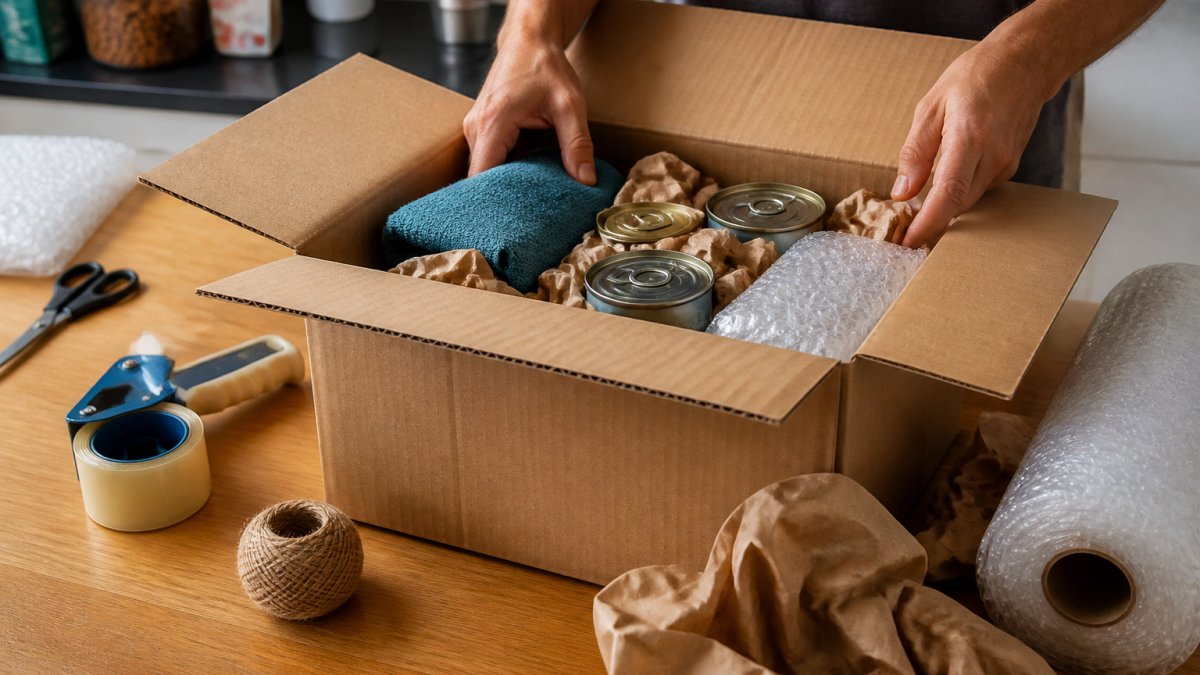
Start with the heaviest items on the base: cans, large food bags and supplement bottles go low and central. Lighter goods, toys and grooming tools sit on top.
Choosing the Right Box and Filler Material
Pick a double-walled box for anything over a few kilograms, and never reuse a box that has been through the post. Old boxes lose strength at the corners, exactly where a parcel takes its first hit.
For filler, use what suits the job:
- Bubble wrap for bottles, glass jars and anything fragile
- Packed paper or air pillows for filling gaps around food bags
- Absorbent lining under liquids to catch leaks before they spread
Securing Bottles, Cans and Loose Items
Bottles are the biggest risk in any pet supply order. Wrap each one, tape the lid, then bag it separately so a leak stays contained. Cans go in a single layer, not stacked.
Loose items are the quiet culprit: a single toy rattling in a half-empty box will batter everything near it. Pack small items into a smaller inner box, then place that box inside the main one.
Protecting Bulky, Fragile and Temperature-Sensitive Products
Bulky items like horse feed buckets, litter trays and large beds, fragile goods and heat-sensitive products each need their own approach.
For bulky goods, use the box as the cushion: choose one that fits snugly, add corner protection, and pack so the item cannot rotate.
Temperature-sensitive products are the ones most people overlook. Most pet food and supplements cope with normal transit, but long delays in hot weather can affect quality.
A simple decision rule helps here:
| Product type | Packing approach | Main risk |
|---|---|---|
| Cans and tins | Single layer, padded base | Dents and crushed seams |
| Glass bottles | Wrapped, bagged, double-boxed | Leaks and breakage |
| Dry food bags | Snug box, no sharp edges | Split seams and punctures |
| Bulky goods | Snug box, corner protection | Movement and scuffing |
| Temperature-sensitive | Avoid heat delays | Quality loss |
Checking Pet Food Packaging on Delivery
Checking pet food packaging on delivery takes two minutes and protects your pet. Look for split seams, punctures, crushed corners and any sign of moisture before opening anything.
Do this in a set order:
- Photograph the parcel before opening it.
- Check the outer box for crush marks or damp patches.
- Open it and inspect each bag and tin.
- Smell the food. A sour or stale odour means a seal has failed.
- Check the best-before date against what you ordered.
If a bag is split but the food inside is still sealed and clean, the item is usually fine. If the food itself is exposed or damp, do not feed it to your pet.
What to Do When an Online Order Arrives Damaged
When an online order arrives damaged, stop and document it before throwing anything away. Keep the box, packing material and product exactly as they arrived, they are your evidence. The same discipline applies to pet supplies or a live animal delivered by a transport provider; the difference is urgency and who you notify first.
If pet supplies arrive damaged
Follow these steps in order:
- Photograph the outer box, the damage and the packing
- Keep the original packaging until the claim is settled
- Contact the retailer with your order number and photos
A common mistake is binning the box first, without it, proving the damage happened in transit becomes much harder. Report the problem as soon as you spot it, not a fortnight later.
If a live pet arrives injured or distressed
This scenario needs a different sequence. Do not wait to unpack or settle in, assess the animal first.
- Check breathing, responsiveness and posture before opening the crate fully. If the animal is unresponsive, struggling to breathe or clearly in pain, contact a veterinarian immediately.
- Keep the crate stable and quiet. Do not lift the animal out if it is injured or panicked; move the whole crate to a calm, temperature-controlled space.
- Photograph the crate and the animal before any clean-up, including latches, ventilation, bedding and any visible injury.
- Note the handoff. Record the time of collection, the name of the person who handed the animal over, and any visible damage to the crate at that moment.
- Call the transport provider to report the condition on arrival and ask for their incident process. Do this in parallel with veterinary care, not instead of it.
- Keep all records, photos, messages, tracking, veterinary notes and receipts, in one folder.
Arrival checks for a live pet
Even if the animal looks well, run a short check within the first hour:
- Eyes, nose and gums, discharge, dryness or unusual colour
- Breathing rate and effort at rest
- Coat and skin for cuts, matting or urine scalding
If anything is off, ring your vet rather than waiting to see whether it settles. A pet that arrives dehydrated or overheated can deteriorate quickly.
Reporting and escalation
Report the arrival condition to the transport provider in writing the same day, with photos attached. For consumer guarantees on the goods side, the ACCC guide to consumer guarantees sets out what counts as a major or minor failure and what remedy applies. For carrier disputes on parcels, the Australia Post damaged items process explains how transit claims are assessed.
At Easy Pets, orders are packed by our own family team rather than an outsourced warehouse, so when something goes wrong we can trace exactly how it was packed. That is one reason we ask customers to send photos straight away.
How to Report Damaged Goods to a Retailer (and Get It Resolved)
Reporting damaged goods to a retailer works best when you make it easy for them to say yes. Send one clear message with everything they need.
Use this template:
Subject: Damaged order #[order number]
Hi [retailer name],
My order arrived on [date] and [item] was damaged in transit. Photos of the box and product are attached.
Order number: [number] Item damaged: [product name and quantity] What happened: [brief description]
I would like a [replacement / refund / store credit]. Please let me know what you need from me.
Thanks, [your name]
Keep it factual and skip the anger, retailers resolve calm, well-documented claims faster. If the first reply is slow, follow up once, then ask for escalation.
Under Australian Consumer Law, products must arrive in acceptable condition, and you are entitled to a remedy when they do not. The ACCC guide to consumer guarantees sets out what counts as a major or minor failure and what remedy applies. For anything involving a carrier dispute, the Australia Post damaged items process explains how transit claims are assessed.
Tracking, Accountability and Delivery Contingencies
Tracking is not just for knowing when a parcel lands. It is your record of who handled it and when, and it matters most when something goes wrong, especially when a parcel is delayed, sitting in a hot depot or exposed to weather, which is exactly when pet food, supplements and temperature-sensitive goods are most at risk.
Check tracking at four points, not one
Check tracking when the order is dispatched, when it reaches the local depot, on the morning it is due, and again if the delivery window passes. Note any scan that sits still for more than two days, a stalled scan often means a parcel is in an unshaded depot, mis-sorted, or waiting on a delayed linehaul.
Keep a simple log for anything temperature-sensitive:
- Date and time of each scan
- Location shown on the scan
- Estimated delivery window
That log is your evidence if a heat-sensitive product arrives degraded and you need to show it spent an extra day in transit.
Heat contingencies
Most pet food and supplements cope with normal transit, but prolonged heat is the main quality risk in an Australian summer. Practical steps:
- Ask the retailer to hold dispatch if a heatwave is forecast for your area or the linehaul route
- Choose a delivery window when someone will be home, so the parcel does not sit on a doorstep in full sun
- Avoid safe-drop instructions for temperature-sensitive goods unless the spot is shaded and weather-protected
Cold, wet and storm contingencies
Cold is less damaging to most dry goods than heat, but moisture is not. A parcel left in rain or a damp depot can wick moisture through cardboard and compromise seals. If a storm is forecast, redirect the delivery to a parcel locker or staffed pickup point rather than a doorstep. On arrival, check the outer box for damp patches, a soft or stained corner is a warning sign.
Missed connections and extended waits
For multi-leg deliveries, a missed connection can add a day or more. If tracking shows the parcel has been re-routed or is waiting at an intermediate depot:
- Contact the carrier and ask for the current location and expected movement
- Ask the retailer to note the delay against your order
- For perishable or heat-sensitive items, ask whether the parcel can be intercepted and held at a staffed location rather than left to continue unattended
Accountability at handoff
If a parcel arrives visibly mishandled, crushed, torn, wet or re-taped, photograph it before signing or accepting where possible, and note the damage with the delivery driver. That photo and note are the start of any carrier claim. Keep the tracking record, photos and original packaging together until the claim is settled.
Frequently Asked Questions
How can I prevent pet supplies from being damaged during delivery?
Start with the retailer's packing standards, then check your own end. Order from sellers who use sturdy boxes, fill gaps with filler material and wrap bottles separately. When the parcel arrives, inspect it before signing or opening, photograph any damage and keep the packaging. If you are sending supplies yourself, pack items tightly so nothing shifts, use bubble wrap on glass and cans, and avoid overfilling the box. Damaged pet shipments usually trace back to poor internal packing or a box that was too large for its contents.
What should I do if my pet supplies arrive damaged?
Photograph the parcel and the damaged item before moving anything, keep the box and all packing material, and contact the retailer within a few days of delivery. Describe what was damaged, attach the photos and note your order number. Under Australian Consumer Law, goods must arrive in acceptable condition, so a retailer should offer a replacement, refund or credit. Do not throw out the packaging until the issue is resolved, because it may be needed to assess the claim or support a carrier investigation.
Can I refuse a delivery if the parcel is visibly damaged?
Yes. If the outer box is crushed, wet or torn open, you can refuse the delivery and ask the courier to mark it as damaged. Take photos before refusing and note the time and driver details. Refusing is often the cleanest route because it creates a record with the carrier and stops the goods entering your home. If you accept it, sign as damaged or note the condition on the delivery device, then report it to the retailer straight away.
How can I tell whether pet food packaging has been damaged?
Check the seal, the seams and the base of the bag or can. Look for punctures, damp patches, powder leaking into the box, dents on cans, or a swollen or bulging lid. Smell the contents if the seal looks compromised. Any breach in a sealed pet food package means the food may be contaminated or stale, so do not feed it. Photograph the damage and report it to the retailer, because checking pet food packaging on delivery is the fastest way to catch a problem before your pet eats it.
Damaged pet shipments are preventable, and the fix is rarely complicated: a proper box, real filler, a quick inspection and a fast report when something slips through. Easy Pets packs every order by hand, stocks more than 8,000 products for dogs, cats, horses and farm animals, and ships Australia-wide with free shipping on light items over $120 up to 10kg in selected areas. Add to cart with confidence, knowing your order is checked before it leaves us.