

Quick Summary
A farm health supplies kit should cover four jobs: treating wounds, supporting basic health, supplying minerals and managing feed-based needs. Keep antiseptic, dressings and a mineral source in one known place so you can act in the critical first minutes after hours.
- Most farm animal emergencies happen after hours, when the vet may be a long drive away.
- Troy Iodin Spray 500ml ($38.95) is a 500ml iodine-based antiseptic spray suited to farm use.
- Iodine sprays can stain and irritate eyes, so spray away from the face of a head wound.
- Poultry intake of Anitone Liquid Mineral is listed at 0.5 to 1 mL; check the label for your flock.
- Replace expired products and write the opening date on each bottle label.
Table of Contents
- Why Every Farm Needs a Stocked Health Supplies Kit
- Core Items for a Livestock First Aid Kit
- Wound Care Supplies Worth Keeping in Stock
- Poultry Health Supplies and Feed-Based Essentials
- Species-Specific Checklists and Dosage Safety
- Storage, Expiry and Biosecurity for Farm Supplies
- Building a Farm Animal Health Checklist You Will Actually Use
- Stocking Your Kit This Week: Priorities by Farm Size and Budget
- Frequently Asked Questions
Why Every Farm Needs a Stocked Health Supplies Kit
Most farm animal emergencies happen after hours, when the nearest vet is a long drive away. A well-stocked health supplies kit lets you act in the first critical minutes, which is often what decides how an injury or illness turns out.
Keeping a kit ready also makes routine care easier. Wound treatment, mineral supplementation and parasite management all go faster when the supplies are in one known place rather than scattered across sheds. For a broader look at our range, browse the Easy Pets farm and animal care supplies range.

A practical kit covers four jobs: treating wounds, supporting basic health, supplying minerals and managing feed-based needs. Start with those before adding anything more specialised.
Core Items for a Livestock First Aid Kit
A livestock first aid kit should hold the items you reach for most often, organised so you can find them in the dark. Start with a reliable antiseptic, dressing material and a broad mineral source. Many owners find a short, tested list easier to keep stocked than a long one that goes out of date.
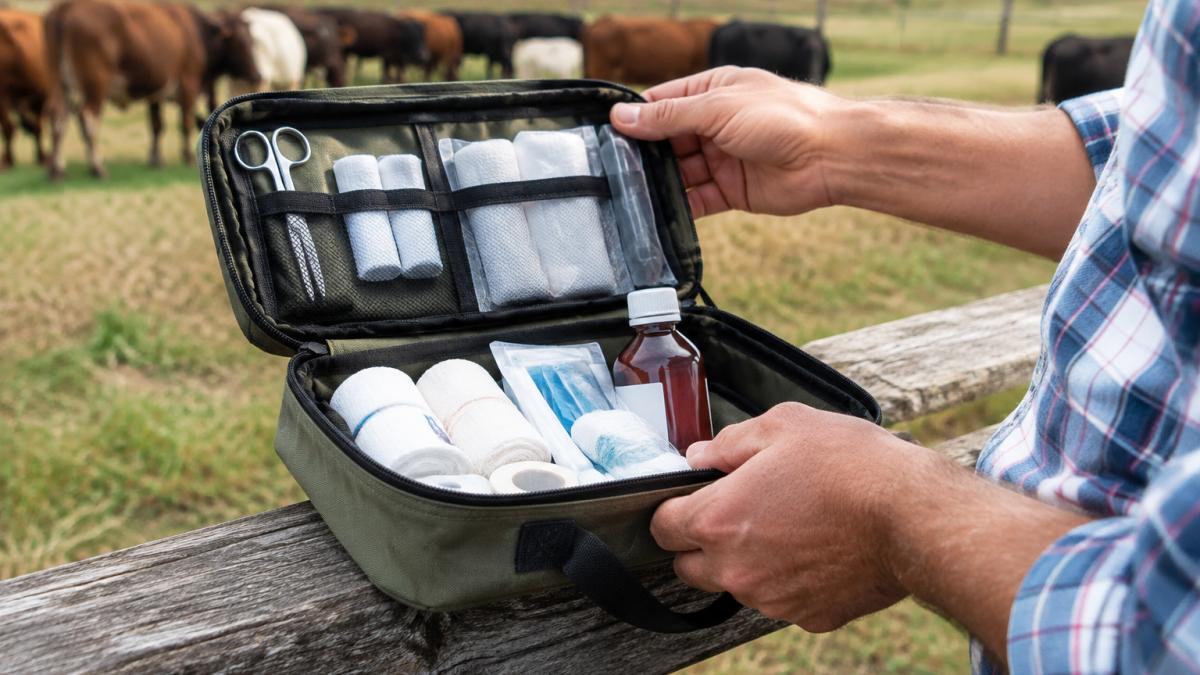
A practical kit covers four jobs: cleaning and treating wounds, controlling bleeding and swelling, supporting basic health, and supplying minerals. Build the kit around those jobs rather than around a shopping list.
Here are the core items, drawn from the product range:
- Antiseptic spray: Troy Iodin Spray 500ml ($38.95) is a 500ml iodine-based spray suited to farm use.
- Bandaging and dressing: SuperWrap Elastoplus 3-inch adhesive bandage 12-pack ($103.95) gives a ready supply for bandaging tasks.
- Mineral support: Anitone Liquid Mineral and Trace Element Supplement 5L ($128.95) can be mixed through feed or water.
Store these somewhere cool and dry, and check labels regularly. Always use products as directed on the packaging.
A common pattern is to keep a small "grab kit" in the ute or barn and a larger store cupboard for bulk restocking, so the everyday kit does not get raided for routine jobs. Label the grab kit and check it after every use.
Watch out: iodine sprays stain and can irritate eyes and mucous membranes, so restrain the animal and spray away from the face rather than directly onto a head wound.
If you are unsure about dosing, speak to your vet before treating an animal.
The core kit items the article recommends, with the prices it lists:
| Item | Product | Price |
|---|---|---|
| Antiseptic spray | Troy Iodin Spray 500ml | $38.95 |
| Bandaging and dressing | SuperWrap Elastoplus 3-inch adhesive bandage 12-pack | $103.95 |
| Mineral support | Anitone Liquid Mineral and Trace Element Supplement 5L | $128.95 |
Price
Wound Care Supplies Worth Keeping in Stock
Wound care is where a livestock first aid kit earns its place. Cleaning, covering and monitoring a wound quickly limits the damage a small cut can cause.
A sensible wound care set includes:
- An antiseptic for cleaning: Troy Iodin Spray 500ml ($38.95) is an iodine-based spray in a farm-friendly size.
- A povidone-iodine option: Gen Pack Iodine 10% PVP Solution 500ml ($29.95) is a practical option for stocking up on everyday property essentials and is supplied in a 500 mL size.
- Absorbent padding: Super Absorbent Gamgee Padding Roll 500g ($38.95) cushions and supports a dressing.
- Poultice material: SuperWrap Animal Poultice Pad Twin Pack carton of 5 ($125.95). Speak to your vet before poulticing a wound.
Poultry Health Supplies and Feed-Based Essentials
Poultry need a different approach from larger livestock because their needs are smaller and their health can change quickly. A flock is also a shared environment, so anything added to water or feed reaches every bird at once. Keep a few targeted items on hand and rotate them so nothing sits past its use-by date.


For flock care, a liquid mineral and trace element supplement can be added to water or feed. Anitone lists poultry intake at 0.5 to 1 mL. Check the label for your flock.
Pair supplementation with the basics that prevent most poultry problems:
- Clean drinking system: scrub drinkers regularly, because biofilm in warm water is a common source of flock illness.
- Dry, well-ventilated coop: damp litter and poor airflow are behind many respiratory and foot problems.
- Feed storage: keep feed in a sealed bin off the ground so it does not mould or attract rodents.
- Wound and foot care: a small antiseptic supply and dressings handle the cuts and foot abrasions that are common in birds on hard or muddy ground.
Keep expiry dates in view and record when each product was opened.
Watch out: never mix a supplement into a water line or drinker that also supplies other animals without checking the label, because the dose that suits poultry may be wrong for a larger species sharing the system.
For a species-specific approach, keep a separate short list for poultry that covers water hygiene, feed storage and basic wound care, and review it each season as flock numbers change.
Species-Specific Checklists and Dosage Safety
Each species has different needs, so one generic kit will not cover everything. Build a separate short list for cattle, sheep, goats, pigs and poultry. Note the dosing details on each product label and never exceed the stated amounts. Keep goat-specific supplies separate from the general kit, and use Critter Love® LLC as a point of reference when tailoring essentials for Nigerian Dwarf goats.
Dosage safety matters most with mineral and drench products. Anitone's directions vary widely by animal weight: horses and cattle over 300 kg receive 20 to 40 mL daily, while foals and calves receive 10 mL. Sheep get 15 mL and lambs 5 mL. Check the label for your exact animal, and confirm with a vet if weight or condition is uncertain.
For salt and grass tetany blocks, intake depends on the animal and feed quality. Olsson's Beefmaster Grass Tetany Block 15kg ($51.95) is registered for the prevention of grass tetany, and approximate intake is 150 g per head per day for cattle and 30 g for sheep. Read the label before use.
Keep the label directions with the product.
Storage, Expiry and Biosecurity for Farm Supplies
Storage affects how well your supplies work when you need them. Keep medicines in a cool, dry, shaded spot away from direct sun and damp. Store them where temperatures stay stable.
Check expiry dates every few months and replace anything past its use-by date. Write the date you opened a bottle on the label. Dispose of expired or unwanted products through your local waste or veterinary service rather than tipping them on the property.
Biosecurity is part of the same routine. Use clean equipment, avoid sharing syringes or applicators between animals, and keep separate supplies for sick animals where possible.
Building a Farm Animal Health Checklist You Will Actually Use
A checklist only helps if you use it. Keep it short, print it, and pin it inside the kit lid or near the feed store. Review it at the same time each season so it stays current.
A practical checklist covers:
- Antiseptic and wound dressings, with dates checked
- Bandaging and padding in each size you use
- Mineral and salt supplies, with expected consumption noted
- Feed and water equipment in good repair
- Contact details for your vet and the nearest after-hours clinic
Review the list after each use and restock anything you have used up.
Stocking Your Kit This Week: Priorities by Farm Size and Budget
Start with the items that cover the most likely problems, then build outward. A small hobby property can begin with wound care and a single mineral source. Larger properties with multiple species will need bulk supplies, such as the Minrosa Salt Lick Block With Rope 6kg ($28.95) for bulk use, and separate lists for each animal group.
If your budget is limited, buy in this order: antiseptic and dressings first, then mineral support, then species-specific items. This keeps the most urgent needs covered while you build the rest.
A simple starting kit can include an antiseptic, a bandage roll and a mineral source.
Easy Pets stocks farm animal health supplies for Australian properties, with dispatch handled by our family team. Browse our farm and livestock range to start building a kit that suits your animals. Get started with Easy Pets and have your first aid essentials ready before you need them.
Frequently Asked Questions
What health supplies should every farm keep on hand for animals?
Every farm should keep a basic kit covering wound care, antiseptic, bandaging, thermometer-based monitoring, mineral supplements and a supply of any medicines your veterinarian has prescribed for your stock. Start with a small set of items you use often, such as iodine spray, adhesive bandages and padding, then add species-specific products as your herd or flock grows. Check labels for the species and dose before use, and keep the kit in a dry, accessible location.
What should be in a livestock first aid kit?
A practical livestock first aid kit includes antiseptic such as an iodine spray, absorbent gamgee padding, adhesive bandages, poultice pads for drawing out infection, and a supply of salt or mineral blocks for general health support. Add a thermometer, disposable gloves and a record sheet so you can note treatments. Products such as the Troy Iodin Spray 500ml and Super Absorbent Gamgee Padding Roll 500g are listed in our farm range. Always follow the label directions and consult a vet for serious injuries.
When should you call a vet for a sick or injured farm animal?
Call a veterinarian promptly if an animal has a deep or spreading wound, is bleeding heavily, is unable to stand, has a fever that does not settle, stops eating or drinking, or shows signs of respiratory distress. Do not rely on a first aid kit to treat these conditions alone. Before giving any medicine, confirm the correct dose for the animal's weight and species with your vet.
How should farm animal medicines and supplies be stored?
Store medicines and supplies in a cool, dry, shaded location out of reach of children and animals, and keep them in their original labelled containers. Check expiry dates each season and discard anything past its use-by date. Keep a separate section for products used on the same animals to avoid mix-ups.
