

Last Updated: October 31, 2026
Quick Summary
The 5 best foods for senior cats at Easy Pets are Pro Plan Adult Cat 7+ Dry Food, Hills Adult 11+ Age Defying Dry Food, Advance Healthy Ageing Chicken Dry Food, Pro Plan Senior 7+ Chicken Wet Pouches and Fancy Feast Classic Pate Senior Chicken. Match the food to your cat's age bracket, teeth and water intake, and transition over seven to ten days.
- Pro Plan Adult Cat 7+ dry food comes in a 1.5kg pack at $56.95 for cats aged 7 and over.
- Hills Adult 11+ Age Defying dry food is sold in 1.58kg and 3.17kg bags at $65.95 and $101.95.
- Advance Healthy Ageing Chicken dry food is a 4kg bag at $106.95, best for multi-cat homes.
- Pro Plan Senior 7+ Chicken wet pouches cost $44.95 for 12 x 85g and suit cats with small appetites.
- Move a senior cat to new food over seven to ten days, mixing increasing amounts of the new diet.
Table of Contents
- How to Choose Senior Cat Food Without Guessing
- The 5 Best Foods for Senior Cats at Easy Pets
- Wet Food for Senior Cats: Where It Earns Its Place
- Dry Food for Senior Cats: Convenience, Cost and Control
- Building a Senior Cat Feeding Schedule That Actually Works
- How to Transition a Senior Cat to New Food Safely
- What to Add to Your Cart at Easy Pets
- Frequently Asked Questions
How to Choose Senior Cat Food Without Guessing
The 5 best foods for senior cats are not the ones with the biggest "senior" label. A 2020 comparison published in the Journal of Feline Medicine and Surgery found no significant difference in crude protein between foods marketed for senior cats and those for adult cats. The label alone tells you very little.
At Easy Pets, we stock senior diets from Pro Plan, Hills and Advance, and read the fine print on every one. What matters is the cat in front of you: its weight, appetite, teeth, and any condition your vet has flagged.
Here is the short version of how we judge a senior food:
- Life stage match. "Senior" on a pack usually means age 7+ or 11+. Pick the one closest to your cat's age.
- Wet, dry or both. Wet food adds moisture and is easier on sore teeth. Dry food is cheaper per serve and easier to leave out.
- Portion control. Senior cats lose muscle easily and gain weight easily. The pack's feeding guide is a starting point, not a rule.
The 5 Best Foods for Senior Cats at Easy Pets
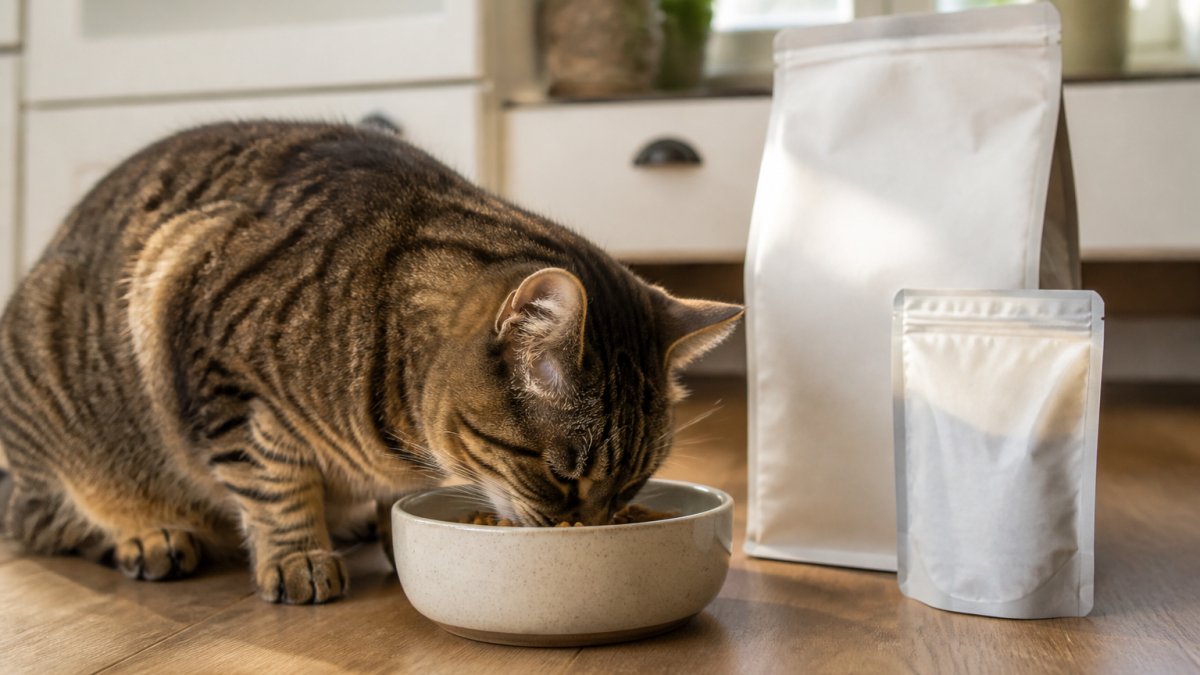
None of them is a veterinary prescription diet. If your cat has diagnosed kidney disease, diabetes or another condition, your vet's recommendation comes first.
Pro Plan Adult Cat 7+ Dry Food (1.5kg)
The most straightforward starting point for a cat that has just turned seven.
The 1.5kg size suits a single-cat household; feeding two cats means reordering often. Shop the Pro Plan Adult Cat 7+ 1.5kg bag to try it before committing to a larger format.

Best for: a first senior diet for a cat aged 7-10 with no known health issues. Skip if: your cat has had dental work and struggles with kibble.
Hills Adult 11+ Age Defying Dry Food (1.58kg and 3.17kg)
Once a cat passes 11, the age bracket changes and so should the food.
The Hills 11+ Age Defying dry food is available in two sizes. Pick up the 1.58kg Hills 11+ bag or the larger 3.17kg Hills 11+ bag depending on how many mouths you feed.

Best for: cats aged 11+ in single or multi-cat homes. Skip if: your cat is under 11 and doing well on a 7+ formula.
Advance Healthy Ageing Chicken Dry Food (4kg)
This is the Advance Healthy Ageing chicken recipe in a 4kg bag at $106.95.
Best for: multi-cat homes and owners buying in bulk. Skip if: you have one small cat and no room to store a 4kg bag.
Pro Plan Senior 7+ Chicken Wet Pouches (12 x 85g)
Wet food earns its place for older cats because of moisture and texture. Pro Plan Senior 7+ Chicken comes as 12 x 85g pouches for $44.95, formulated for cats aged 7 and over.
Order the Pro Plan Senior 7+ chicken pouches to build a mixed feeding routine.

Best for: cats with a small appetite, or cats that need more moisture in their diet. Skip if: you need a single food that can be left out all day.
Fancy Feast Classic Pate Senior Chicken (24 x 85g)
Fancy Feast Classic Pate Senior Chicken comes as 24 x 85g serves for $76.95.
Best for: fussy eaters and cats that prefer soft texture. Skip if: you want one food to cover all of your cat's nutritional needs.
Wet Food for Senior Cats: Where It Earns Its Place
Wet food for senior cats is worth the cost when hydration or appetite is the problem.
How much wet food do you actually need to add? A common pattern is to replace one dry meal a day with a wet meal rather than switching entirely.
The trade-offs are real, and they are not just cost:
- Cost per calorie. Wet food costs more per calorie than dry. A 12 x 85g pack of Pro Plan Senior 7+ Chicken is priced at $44.95.
- Spoilage. An opened pouch or tin cannot be left down all day, particularly in warm weather. Feed it in one sitting or refrigerate the remainder and bring it to room temperature before the next meal.
- Waste. Senior cats with small appetites often leave half a pouch. Splitting a pouch across two meals, or choosing smaller formats, reduces waste.
Texture matters as much as moisture. Shredded and flaked textures in gravy add moisture but can be harder for a cat with dental pain to pick up.
Dry Food for Senior Cats: Convenience, Cost and Control
Dry food for senior cats can be measured precisely by portion.
The catch is water. Kibble contains very little moisture, so a cat on a dry-only diet has to drink enough to compensate. Watch the water bowl. If it is barely touched, add a wet meal.
Building a Senior Cat Feeding Schedule That Actually Works
A senior cat feeding schedule should be fixed, measured and reviewed monthly. Older cats do better on routine than on free-feeding. But a schedule is only half the job, the other half is knowing whether the food you have chosen is actually working.
| Time | Meal | What to serve | Why |
|---|---|---|---|
| Morning | Main meal | Wet pouch or pate | Highest appetite of the day, best time for moisture |
| Midday | Small top-up | Measured dry portion | Keeps something in the stomach without overfeeding |
| Evening | Second meal | Wet or dry, whichever your cat prefers | Splits the daily intake and reduces begging |
| Overnight | Nothing | Fresh water only | Prevents grazing and makes weight easier to track |
A senior cat that gains weight needs the portion cut, not the food changed. A cat that loses weight needs a vet visit, not a bigger bowl.
How to tell whether the food is working
Age alone does not determine nutrient needs, and a "senior" label is not a guarantee of anything. The only reliable test is how your cat responds over four to eight weeks. Track these five things, ideally on the same day each month:
- Weight trend. Weigh on the same scale, at the same time of day. A steady weight is the goal. A loss of more than about 5% of body weight over a few months, without a deliberate portion cut, is a reason to book a vet visit rather than change food again.
- Appetite. A cat that cleans the bowl every meal is fine. A cat that leaves food or walks away after a few bites is telling you something, often dental pain, nausea or a food it does not accept. Do not assume fussiness.
- Stool. Formed, easy to pick up, and consistent in colour. Loose stool, straining, or a sudden change in frequency can point to a food that does not suit, or to a condition that needs checking.
When a standard senior formula is not enough
A standard senior diet is designed for a healthy older cat, not for a cat with a diagnosed condition. This is where owners most often go wrong, continuing on a supermarket senior food because the label says "senior" while a vet has already flagged kidney disease, diabetes or dental problems.
- Kidney disease. Cats with chronic kidney disease often need restricted phosphorus and controlled protein, which a standard senior diet does not provide. Your vet will typically recommend a therapeutic renal diet, and the earlier the switch, the better the outcome tends to be.
- Diabetes. A diabetic cat needs a diet matched to its insulin protocol, usually higher in protein and lower in carbohydrate, with meals timed to insulin. This is a conversation with your vet, not a shelf decision.
- Dental disease. A cat with sore or missing teeth may do better on soft pate or a specifically designed dental diet. Texture, not just nutrient profile, is the deciding factor.
Owners often spend weeks trialling different senior foods when the real issue is a diagnosed condition that needs a therapeutic diet. If your cat has a known condition, ask your vet which diet fits it before you buy another bag.
How to Transition a Senior Cat to New Food Safely
A senior cat should move to new food over seven to ten days, mixing increasing amounts of the new diet into the old one. Older digestive systems handle abrupt switches badly.
A simple schedule:
- Days 1-2: one part new food to three parts old.
- Days 3-4: one part new to one part old.
- Days 5-6: three parts new to one part old.
- Days 7-10: all new food.
Watch out: if your cat stops eating entirely for more than a day, go back a step. Cats that refuse food for long periods can develop liver problems, and a senior cat has less margin than a young one.
What to Add to Your Cart at Easy Pets
Choosing senior cat food gets easier once you accept that the label is only a starting point.
Easy Pets is an Australian family-owned online retailer with more than 8,000 products across dogs, cats, horses and farm animals, dispatched Australia-wide by our own team.
Start with a small bag or a single pack of pouches, see how your cat responds, then stock up.
Frequently Asked Questions
Do senior cats need high-protein food?
Older cats lose muscle mass more easily, so keeping protein intake up matters for muscle maintenance. That said, a food labelled for senior cats is not automatically higher in protein: Check the label rather than the marketing, and ask your vet if your cat has kidney issues.
At what age is a cat considered senior or geriatric?
Most feeding guidelines split senior cats into two groups: 7+ for early senior years and 11+ for mature seniors, which is why products like Hills Adult 11+ Age Defying exist alongside 7+ formulas. Geriatric generally refers to cats around 15 and over. Body condition and bloodwork tell you more about your individual cat than the birthday alone, so pair the age bracket with a vet check.
Should senior cats eat wet or dry food?
Wet food and dry food are both available for senior cats. Many owners feed both. A practical split is a wet pouch in the morning and measured dry food in the evening, adjusting portions so total calorie intake matches your cat's body condition.
How do I transition my senior cat to new food?
Over seven to ten days, mix the new food into the old at roughly 25 percent new for the first few days, then 50, then 75, finishing on all new food. Older cats are more set in their ways and more prone to digestive upset, so go slower than you would with a kitten. Watch appetite, stool quality and energy, and pause the ratio if anything slips.
How often should an elderly cat be fed?
Most senior cats do well on two measured meals a day, morning and evening, which makes it easy to spot a dropped appetite early. Cats with dental issues, low weight or conditions like diabetes may need smaller, more frequent meals instead. Weigh your cat monthly and adjust portions rather than free-feeding, since weight management gets harder with age.
